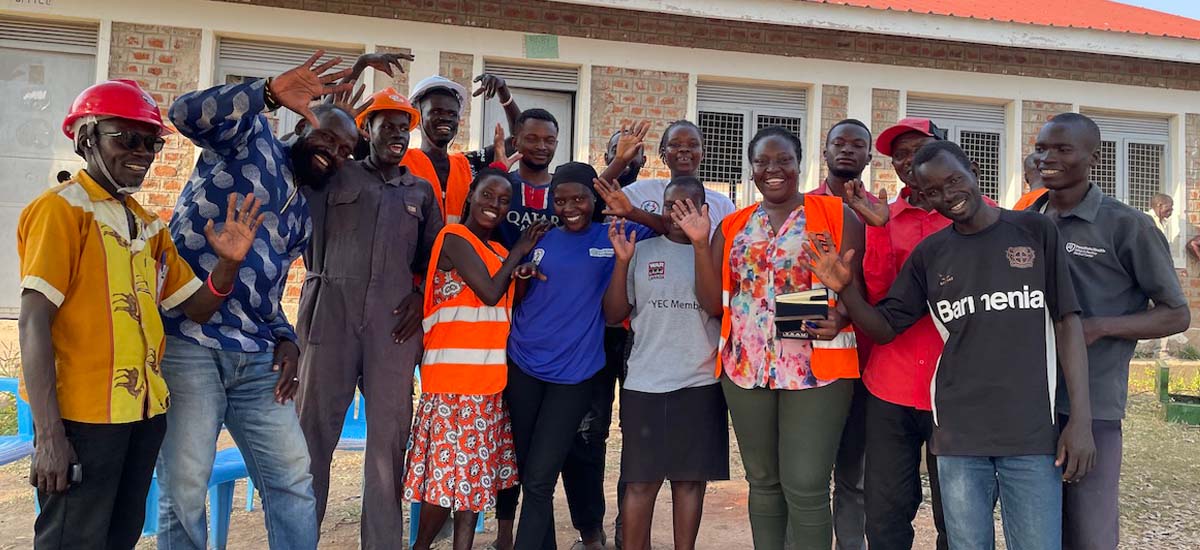


It all began with an email from a stranger. A year later, two fully operational, community‑owned digital hubs now serve over 4,500 people—most of them refugees—in a region with limited grid power, high connectivity costs, and uneven digital access. And the stranger became a friend who showed us what community-centered connectivity at its best looks like.
Community-centered connectivity is one of the most effective approaches available to bring connectivity to the hardest-to-connect areas worldwide. Its focus on having communities fully own the network from ideation to deployment onto maintenance helps create sustainable solutions for places that are deemed unprofitable or too challenging to connect.
When Samuel Lasu from the Community Empowerment & Transformation Agency (CETA) reached out to the Internet Society about needing partners to help connect the Rhino Camp Refugee Settlement in Uganda, we were in the first month of the our 2030 Strategy. Our Action Plan for making the ambitious strategy a reality identified a critical need for helping connect refugee communities, so we knew we had to act.
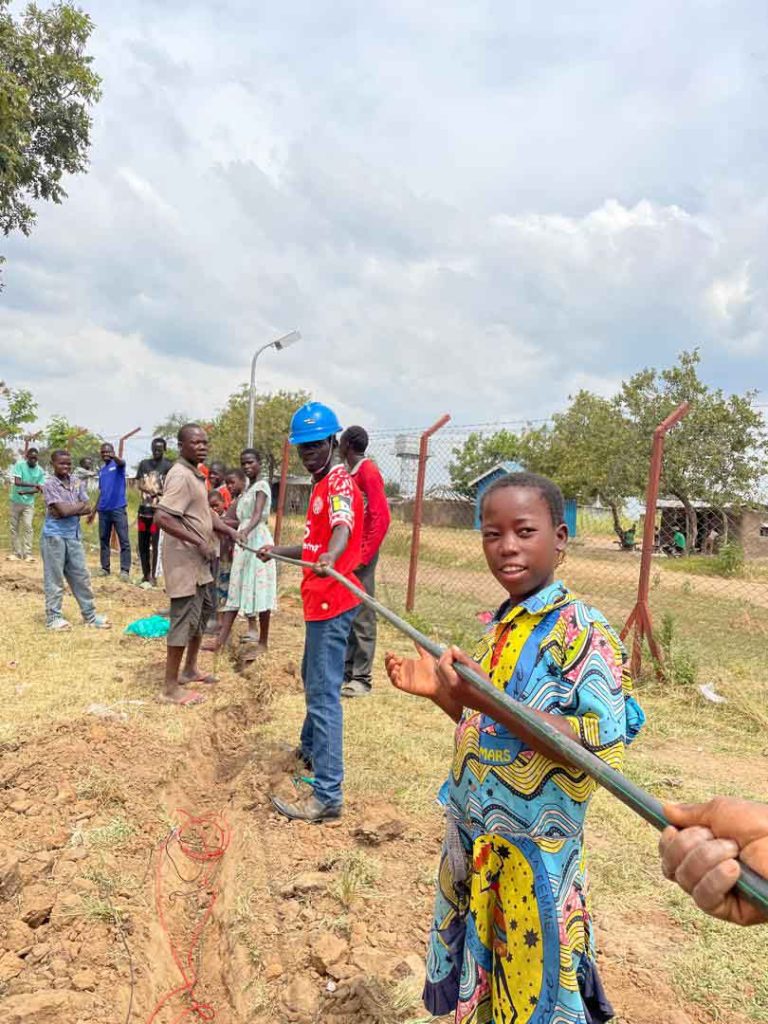
What followed was a partnership between the Internet Society, CETA, Internet Society Foundation grantee Hello World, and the Research and Education Network for Uganda (RENU) to train refugees and members of the surrounding community to not just use the Internet, but to build and manage their own network.
Today, just over a year after that pivotal email, we are excited to share a case study about what we did at the Rhino settlement and what we learned along the way. We are publishing this report in the hope that others can adapt and replicate elements of the model in other refugee or geographically remote communities that are unconnected or underserved.
In a landscape with escalating competition for limited funds for these kinds of projects and a growing emphasis on refugee self-reliance, we set out to pinpoint how success is possible even under the most challenging of circumstances. Which is not to say that it wasn’t difficult (it was) or that the work is done (far from it). But our collective efforts in the Rhino settlement demonstrated the dramatic change that is possible when you get the right people together, and when a community steers and owns its own critical infrastructure.
Read the full case study to learn more.
Image © Hello World