

When Amged B. Shwehdy attended his first global Internet Governance Forum (IGF) in 2019, he expected to learn from the discussions shaping the future of the Internet. Instead, the experience revealed how little Libya was represented in those conversations.
“I remember sitting in the room and feeling a strong sense of absence more than participation. Libya was not only underrepresented but also almost invisible in the broader digital policy conversation,” he said.
For Amged, a Libyan digital governance and policy expert and Internet Society alumnus, the experience highlighted a challenge facing countries that are underrepresented in global Internet governance: discussions about the Internet do not always reflect the full range of communities affected by their outcomes.
The realization was unsettling, but it was also motivating. Rather than accepting that absence, Amged began asking a different question: what would it take for Libya to become an active contributor to Internet governance discussions?
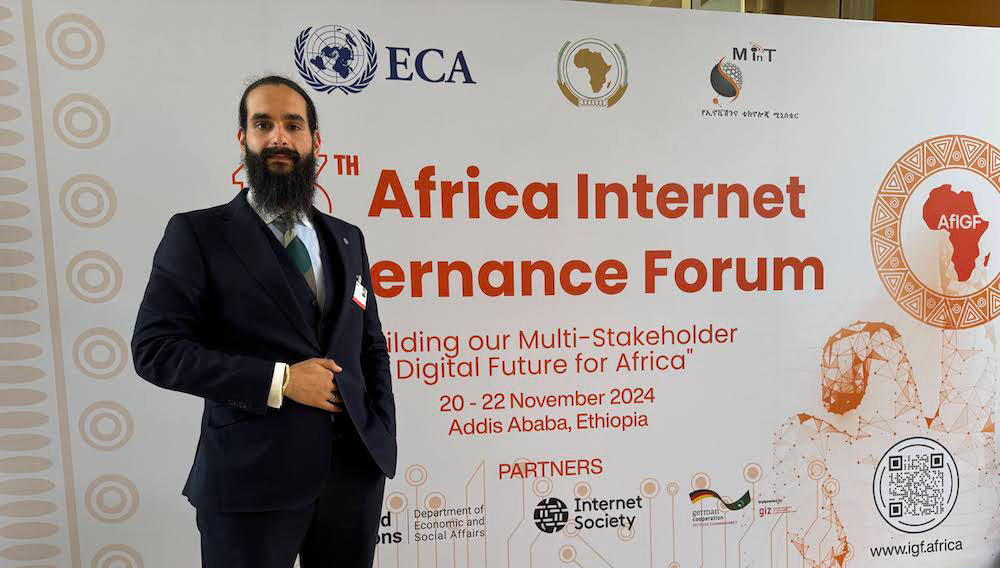
Amged at the 2024 Africa Internet Governance Forum.
Discovering a Pathway to Participation
Seeking to deepen his understanding of Internet governance, Amged joined the Middle East and Adjoining Countries School on Internet Governance (MEAC-SIG) in 2023. The experience connected him with a network of practitioners, policymakers, and emerging leaders from across the region, while strengthening his understanding of the multistakeholder model of Internet governance.
Building on that experience, Amged joined the Internet Society’s Early Career Fellowship in 2024. Through the program, he engaged in global Internet governance discussions, expanded his professional network, and developed a deeper understanding of how digital policy decisions shape communities worldwide.
More importantly, he began to understand that representation alone was not enough.
“The turning point came when I understood that being present in global spaces without a structured national ecosystem meant we were only observing, not shaping outcomes,” he said.
The insight became the driving force behind his work in Libya.
Why Participation Matters
Young people from countries that are underrepresented in Internet governance discussions can face significant barriers to participation, including limited awareness of opportunities, travel costs, and visa restrictions. Even when individuals gain access to international forums, those experiences do not automatically lead to sustained engagement or community impact.
Amged saw this challenge firsthand.
“If youth only speak after decisions are made, it isn’t participation, it is only decoration,” he said.
Meaningful participation, he believes, requires local communities with the knowledge, confidence, and structures needed to contribute consistently to national, regional, and global conversations.
The Internet Society Foundation has long invested in creating those opportunities. Since 2020, the Foundation has committed more than USD $2 million to national, regional, and global Internet Governance Forums and schools on Internet governance, helping strengthen multistakeholder participation and cultivate future Internet leaders around the world.
Turning Learning into Action
With new knowledge, competencies, connections, and a clearer understanding of what effective participation could look like, Amged began working to create similar opportunities for Libya’s Internet governance community from abroad.
His first step was helping establish the Internet Society Libya Chapter, bringing together members of the country’s technology community around a shared vision of an Internet that is open, globally connected, secure, and trustworthy.
The chapter became an important platform for collaboration, but Amged recognized that building a sustainable Internet governance ecosystem would require supporting a new generation of leaders.
That realization led to the creation of the Libya School of Internet Governance, launched in August 2024 through a collaboration between the Internet Society Libya Chapter and the Annir Initiative.
“The Libya School of Internet Governance was designed with a very clear objective: to move participants from observers of Internet governance to active contributors within it,” he said.
The program combines technical knowledge, policy education, and multistakeholder engagement while encouraging participants to critically examine Internet-related challenges and develop their own ideas and solutions.
More importantly, it creates pathways for continued engagement long after participants complete the program.
“Access to global forums is not the end goal; the real impact begins when that access is translated into local institutions, communities, and policy influence,” he said.
That vision is already taking shape. As Libya’s Internet governance community has grown, the Libya Internet Governance Forum has become an important platform for dialogue between government, the technical community, civil society, academia, youth, and the private sector.
While not a decision-making body, the forum has strengthened collaboration on digital governance, cybersecurity, digital rights, and Internet development, with government participation continuing to grow.
Building on that momentum, Amged is also contributing to Libya’s digital policy reform through the Community-Based Initiative for Digital Public Policy Reform, implemented by the Annir Initiative in partnership with the Internet Society Libya Chapter. The initiative demonstrates how the collaborative principles and multistakeholder approach fostered through the Internet Society community are being translated into practical policy reform.
Building a New Generation of Leaders
The Libya School of Internet Governance has graduated more than 50 participants from across the country through its 2024 and 2025 editions. Many graduates have gone on to engage in national, regional, and global Internet governance discussions, bringing new perspectives and experiences to policy conversations.
For Amged, however, the most meaningful outcome is not the number of graduates or events organized. It is seeing participants develop the confidence to lead. One outcome illustrates that shift: the launch of Libya’s first Youth Internet Governance Forum, a platform designed and led by young people themselves.
The initiative represents a shift from participation to ownership, a sign that the community is beginning to sustain itself.
“That evolution shows that the school is not just building knowledge, but building agency and ownership,” said Amged.
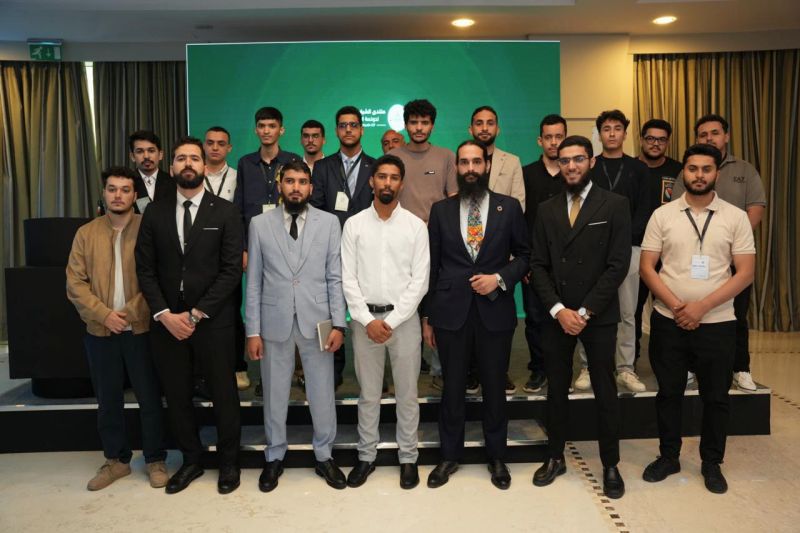
The launch of Libya’s first Youth IGF in 2026.
The Youth IGF has created new opportunities for young people to engage with Internet governance issues, discuss challenges affecting their communities, and contribute to conversations that influence the country’s digital future.
For Amged, it is evidence that investing in people can create lasting impact.
The Effect of One Opportunity
Looking back, Amged sees a clear connection between the opportunities he received and the community initiatives that followed.
“When one fellow develops the confidence, skills, and network to engage meaningfully in Internet governance, they rarely remain isolated. They begin to convene others, mentor peers, and initiate local conversations that did not exist before. That is where the multiplier effect emerges,” he said.
That ripple effect is already visible. Graduates of the Libya School of Internet Governance are now contributing to discussions, organizing community dialogues, supporting new initiatives, and helping expand opportunities for future participants.
“In that sense, investing in one person is never just about that person; it is about activating an entire node in a broader ecosystem of change,” he said.
Leadership Rooted in Community
Today, Amged continues to support Internet governance efforts through mentorship, community building, and participation in regional activities across Africa and the Middle East and adjoining countries (MEAC) region.
He is also a research fellow at the United Nations Economic Commission for Africa, where his work on digital public infrastructure reflects many of the same principles that guide his community work: openness, inclusion, and collaboration.
Throughout his journey, he has focused on connecting global opportunities with local action.
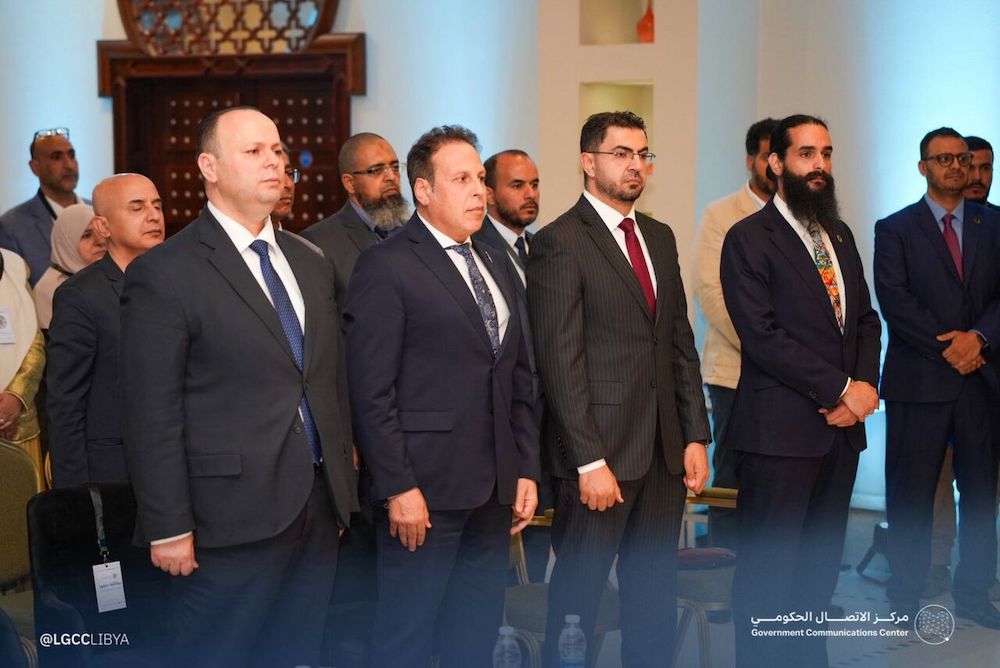
Libya Internet Governance Forum 2026.
“The key is not to treat global and local spaces as separate tracks, but as connected layers of the same work,” he said.
That philosophy continues to shape his approach—bringing lessons from international forums back to Libya while ensuring local experiences and perspectives are represented in global discussions.
“Building an open and inclusive Internet is not a single project, it is the cumulative result of many local efforts connected through shared purpose,” he said.
For the next generation of Internet leaders, his advice remains simple:
“Do not wait for permission to engage. Start by joining existing networks, learning the language of policy, and contributing where you are. Over time, consistency matters more than entry point.”