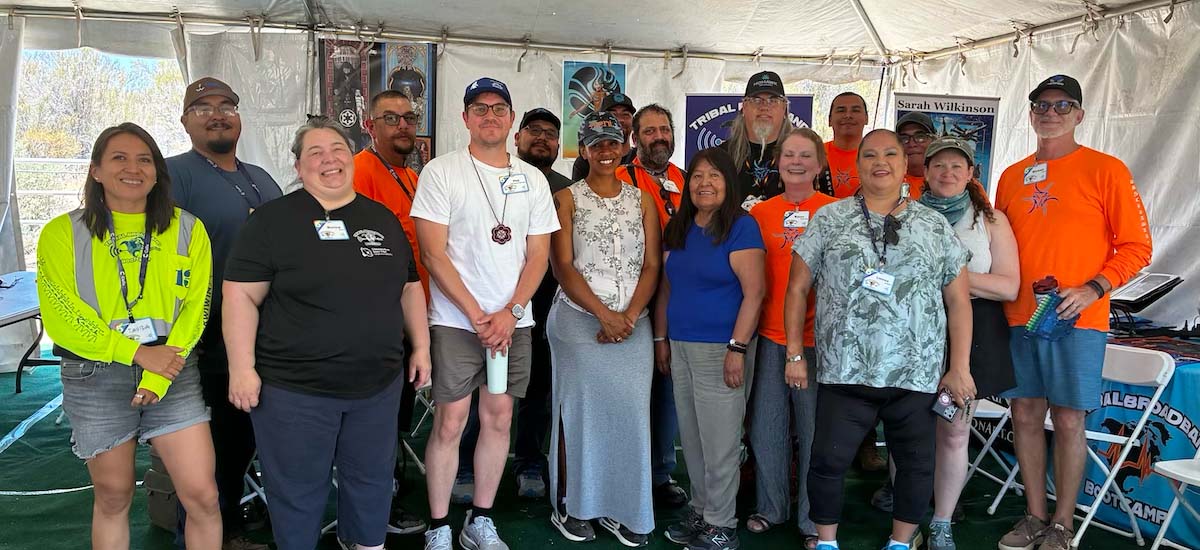

Arriving in the California desert to attend my first Tribal Broadband Bootcamp for the organization’s five-year anniversary celebration, I had the pleasure of sitting down next to a young woman who shared that she felt a bit out of place.
It was her first bootcamp but also her third week on the job as an office assistant in her Tribe’s newly established telecommunications department. She shared that she didn’t feel like she knew anything about connectivity and wasn’t sure how she could contribute throughout the weeklong training.
Returning participants with more experience in the connectivity space smiled warmly and told her she was in exactly the right place.
This young woman was joining a growing group of practitioners in Indigenous connectivity, more commonly called Tribal broadband in the US. Indigenous people are increasingly becoming network operators, fiber technicians, tower climbers, project managers, and the many other roles needed to build and maintain a community network in a Tribal community. This is a critical development because these roles need to be filled by individuals who live and work within the community.
This is what community-centered connectivity looks like in action.
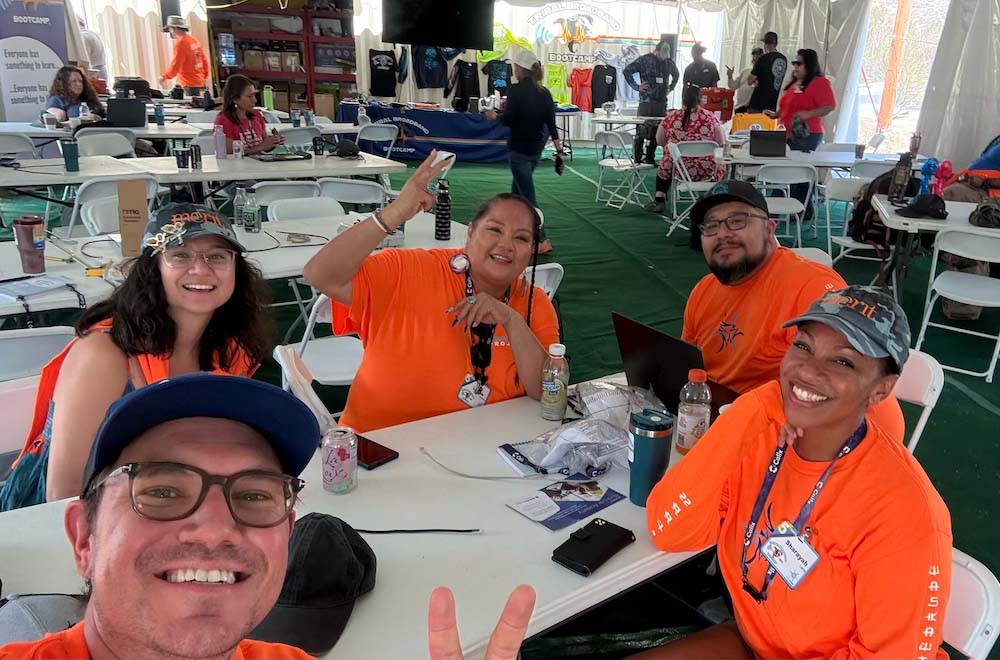
For Tribal communities in the US, there is a new workforce being created alongside Indigenous community networks, and the organization that has led the charge in this work is Waskawiwin.
The Internet Society Foundation was one of the first funders to respond to Waskawiwin’s request: to focus on the people who would carry out the connectivity work in Indigenous communities for years to come. The Foundation saw the value of investing in Indigenous people who would be entering the new telecommunications workforce being developed in their Tribal communities.
The work has been done in a culturally informed environment, where Indigenous people are teaching and sharing alongside one another with a shared understanding of the culture, challenges, and opportunities within Tribal communities across the country.
While the hands-on training proved invaluable to participants, I noticed a vital experience participants were having that was not on the agenda. Like the young woman I met on the first day, there were several participants growing in confidence to take what they were learning back home and continue a career path in telecommunications. This is the spark that has made Waskawiwin’s work so special and so important.
At the Internet Society, we are putting more consideration into ensuring our work on connectivity is meaningful, that the work that goes into building a network isn’t underutilized by the community once established.
We understand that the investment into the people, the community champions, the ones who embrace the new technology, the ones who see themselves as capable of carrying out the work, the next generation of telecommunications experts, this is the side of the work that can’t be overlooked. Waskawiwin has done an incredible job of investing in this side of the work and has big plans for the next five years.
Waskawiwin started hosting Tribal Broadband Bootcamps in 2019 to offer wireless broadband deployment trainings, a need that emerged following the Federal Communications Commission’s 2.5 Rural Tribal Window Program. This first-of-its-kind spectrum allocation to Tribal nations enabled many Tribes to manage the spectrum over their Tribal lands.
Along with the opportunity came a steep learning curve. Tribal communities needed to train community members to build, operate, and maintain wireless and fiber networks in a relatively short period of time. This is where the bootcamps came in.
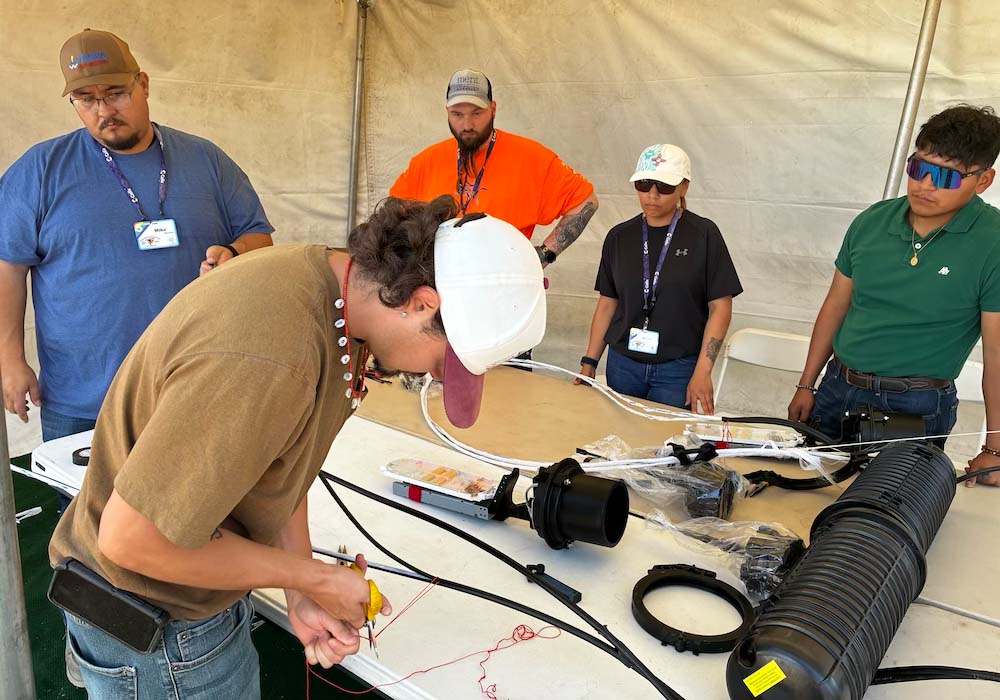
Since their start, the Tribal Broadband Bootcamps have given Indigenous people hands-on training in community networks. A daily agenda can include anything from laying fiber to tower climbing safety, from crimping Ethernet to understanding the technology behind spectrum management.
Participants got to hear from Tribal Internet service providers (ISPs) who have been managing networks for a number of years, to learn future-use skills such as bidding for fiber build contracts, using Tribal data for grant writing, policy advocacy strategy, data center planning, and building sustainable financial models.
A highlight of the event for me was watching a group from the Pueblo of Jemez leading a session on fiber splicing while speaking to one another exclusively in their own language. They shared that the digital inclusion work done in their community is only done in their Indigenous language to especially work with and encourage elders.
After attending a bootcamp for myself and seeing the meaningful connections, the learning and sharing, the comradery being built, and the leaders who return year after year with new developments from their Tribe to share, it was very special knowing that the Internet Society Foundation had a small part in making that possible.
Image © Tribal Broadband Bootcamp, © Sharayah Lane