
There are many reasons why communities worldwide still lack meaningful Internet access, even decades after the Internet has become a staple of everyday life for others. Technical and policy limitations, geographic barriers, and high costs all play a part. More often than not, multiple factors are at play.
But while the exact reasons vary from one unconnected community to the next, one common solution for connecting these hard-to-reach places has emerged in recent years: community-centered connectivity—networks built and maintained by and for the communities themselves, in partnership with technical experts.
A new report from the International Telecommunication Union (ITU) takes a close look at how community-centered connectivity efforts are helping connect people living beyond the geographic or business reach of traditional last-mile connectivity models.
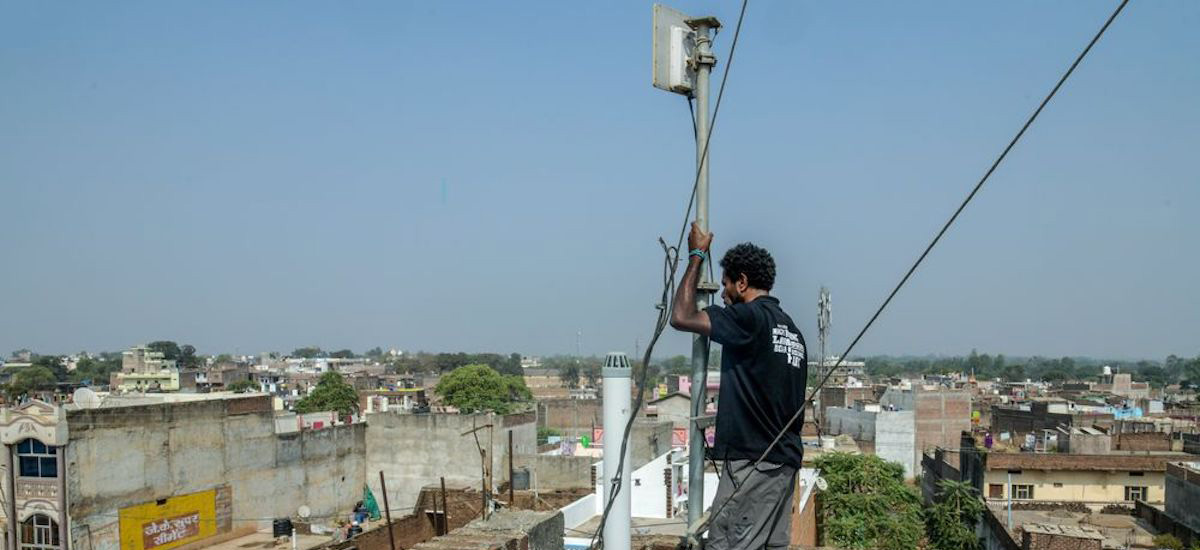
The report highlights practical, real-world examples, including projects that the Internet Society is proud to have been part of: Thailand’s first community network, TakNet; the Common Room Network in Indonesia; and the Digital Empowerment Foundation’s (DEF) Wireless for Communities (W4C) network in India.
DEF was the Internet Society’s first community network partner, back in 2010, when we collaborated to establish the W4C network in rural Chanderi. At the time, community networks were experimental. Now, 16 years later, as the report demonstrates, they are a visionary and effective tool for narrowing the digital divide.
The ITU plays a critical role in mapping global connectivity and identifying where gaps remain. Its research helps us pinpoint where the need for the technical community’s expertise is most acute, while also allowing us to celebrate and learn from success stories from around the world. These case studies add to that longstanding body of work, showing how remote villages and island communities can build sustainable connectivity solutions when local leadership is paired with support from across sectors.
We applaud this emphasis on multistakeholderism. A shared approach is the only way to ensure that the Internet is a force for good, and that those of us who make up the global Internet community can learn from one another and find ways to bring our collective strength to bare on connecting the remaining 2.2 billion people worldwide who are still offline.
Image © Atul Loke/Panos for Internet Society