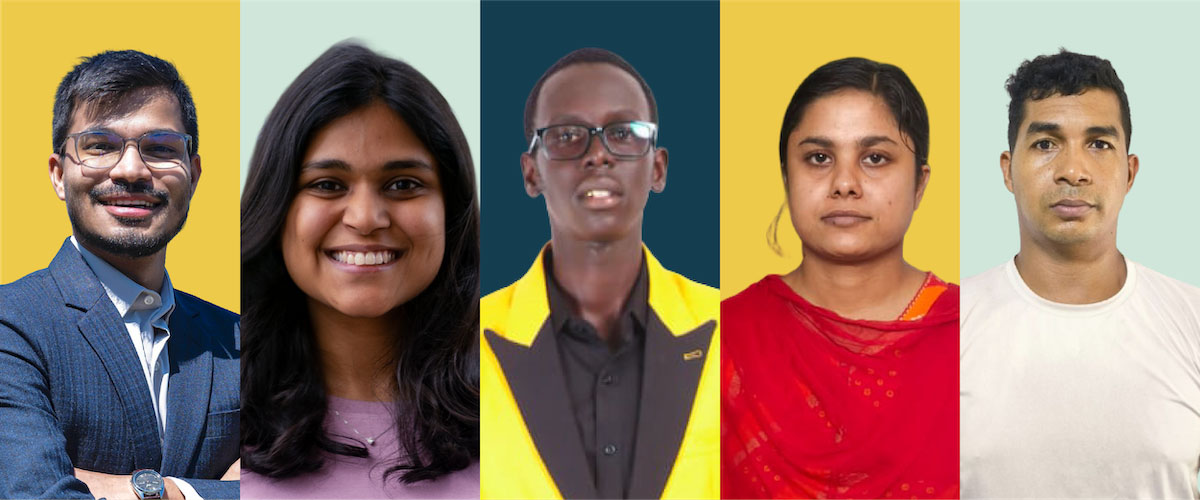

Across the world, young people are shaping the future of the Internet in ways that reflect the realities of their communities.
For some, leadership begins with creating new technologies to solve local challenges. For others, it starts with gaining the confidence to challenge expectations, build new skills, or connect communities that have long been excluded from the digital world.
On this International Youth Day, we highlight young leaders within the Internet Society community who are using the Internet as a tool for opportunity, inclusion, and positive change.
Meaningful connectivity is about more than getting people online. It requires the skills, knowledge, and confidence to participate fully in the digital world. Through programs supported by the Internet Society and Internet Society Foundation, young people are gaining the tools to become innovators, advocates, and community leaders.
Their stories show that when young people are empowered, they do not simply join the digital future; they help create it.
From Seeing the Internet as a Tool to Building Solutions for Social Good
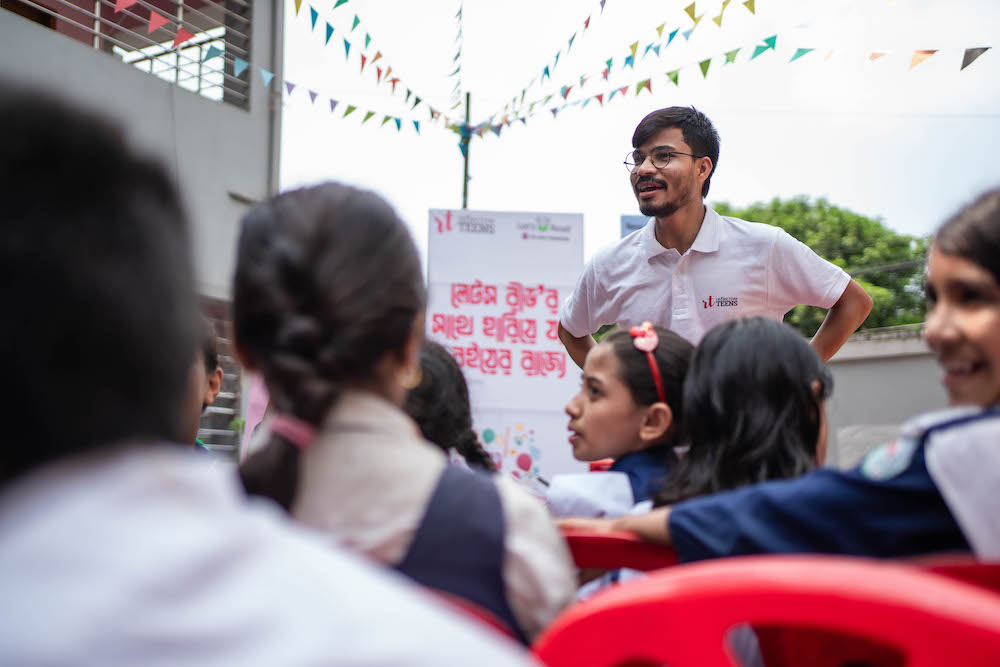
Yusuf Munna leads an Internet awareness session at an under-resourced primary school while introducing the “Let’s Read” e-library, which provides books on morals, values, ethics, and harmony. Image © Reflective Teen.
For Yusuf Munna, founder of Reflective Teens, a youth-led nonprofit in Bangladesh, the Internet had always represented an opportunity to create social impact. But participating in the Early Career Fellowship program changed the way he understood its possibilities.
Yusuf and his organization were already using digital platforms to engage communities and raise awareness. However, he had never received structured training on how the Internet ecosystem works or how to strategically use it to create sustainable impact.
The fellowship introduced him to Internet governance, digital inclusion, multistakeholder collaboration, and the role of the Internet in advancing development.
“Before the fellowship, I saw the Internet as a tool. After the fellowship, I saw it as an ecosystem that can transform lives. That shift has inspired me to build technology-driven solutions that create lasting social impact in Bangladesh,” says Yusuf.
This shift in perspective influenced the direction of Reflective Teens. The organization established a dedicated innovation wing focused on harnessing emerging technologies for social good.
Through this work, Yusuf and his team are developing solutions such as an AI-powered teaching assistant to help teachers in under-resourced schools automate lesson planning and strengthen classroom preparation. They are also exploring affordable AI-enabled mental health support solutions to expand access to early guidance and learning resources.
His journey reflects the transformation taking place among young leaders around the world: moving from learning about the Internet to using it to address challenges in their own communities.
Advocating for a More Inclusive Digital Future
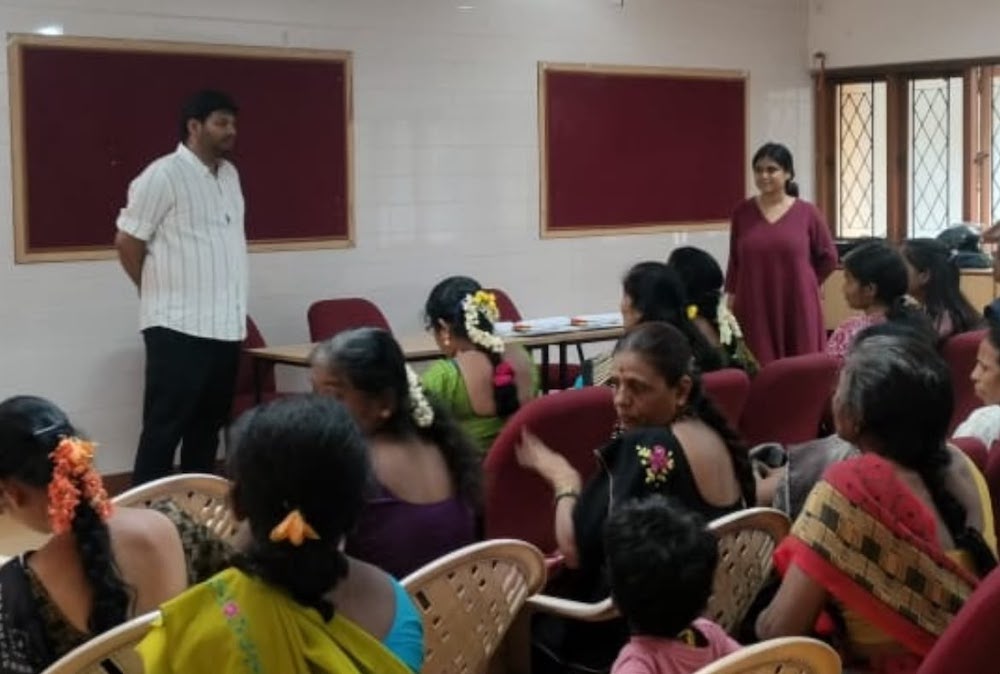
Avani Airan attends a workshop on worker participation in global data supply chains; Garment and Textile Workers Union/Aapti Institute.
For Avani Airan in India, leadership has meant contributing to conversations about how the Internet should evolve.
As part of the 2021 Youth Ambassador Program, Avani gained deeper insight into Internet governance and the role young people can play in shaping digital policy discussions. Through the program, she developed a research project exploring digital sovereignty and the emergence of the “splinternet,” which she presented at the Internet Governance Forum 2021.
At the same time, as co-founder of DigiHealthConnect Foundation, Avani was working to improve access to public health and education while promoting digital well-being during a period of rapid digital transformation.
The Youth Ambassador community also enabled cross-border collaboration. Together with fellow participants, Avani helped create the Bestiary of Cybercrimes, an interactive resource that combines art and advocacy to explain cyber threats and encourage safer online practices.
The project demonstrates how young people can translate complex Internet issues into accessible resources for their communities.
“The Youth Ambassador Program is a collaborative space for learning and exploration. As a fresh graduate during the pandemic, I found an enthusiastic community of action-minded people here, who helped me find my grounding to sustain a body of work that remains committed to community impact and accessible systems. I hope to remain learning and exploring alongside this group,” concludes Avani.
Creating Opportunities Through Connectivity
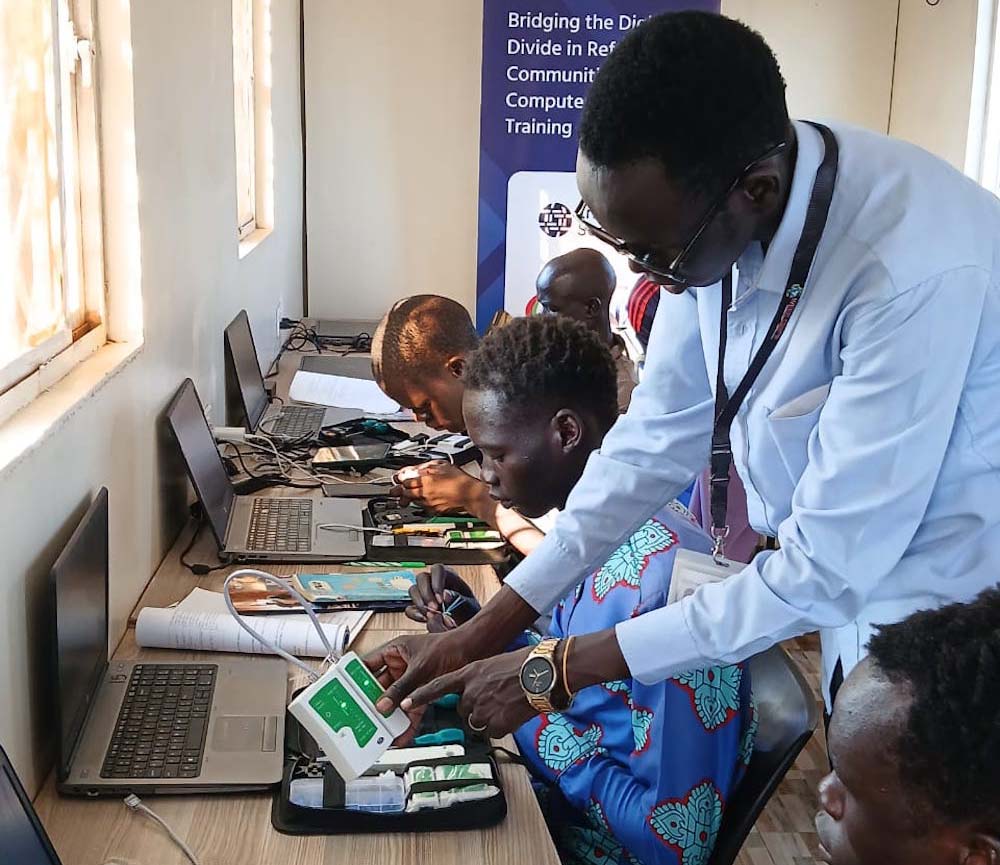
A Fundamentals of Designing and Deploying Computer Networks training at Kakuma Digitruck.
In Kakuma Refugee Camp, Kenya, Samuel Thon is using technical knowledge to create opportunities for his community.
As a trained network engineer, Samuel joined the Designing and Deploying Computer Networks course with a desire to gain practical skills that could help address connectivity challenges in his community.
The training became a turning point, giving him the confidence to transform an idea into action. In December 2025, Samuel launched a community network in Kakuma that now provides Internet access to hundreds of users, supporting learners and community members who rely on online resources.
But the network has also created an opportunity for Samuel to build a livelihood. He is now self-employed through the community network, using a financially sustainable model that enables him to earn an income while continuing to provide connectivity to people in his community.
“The Internet Society training did not only teach me how networks work; it empowered me to build a network that works for my community,” states Samuel.
Samuel’s journey demonstrates how capacity building can create impact beyond technical skills. When people have the knowledge and opportunity to build solutions for their communities, they also become entrepreneurs, creating livelihoods while helping others get online.
Turning Digital Skills into Opportunity
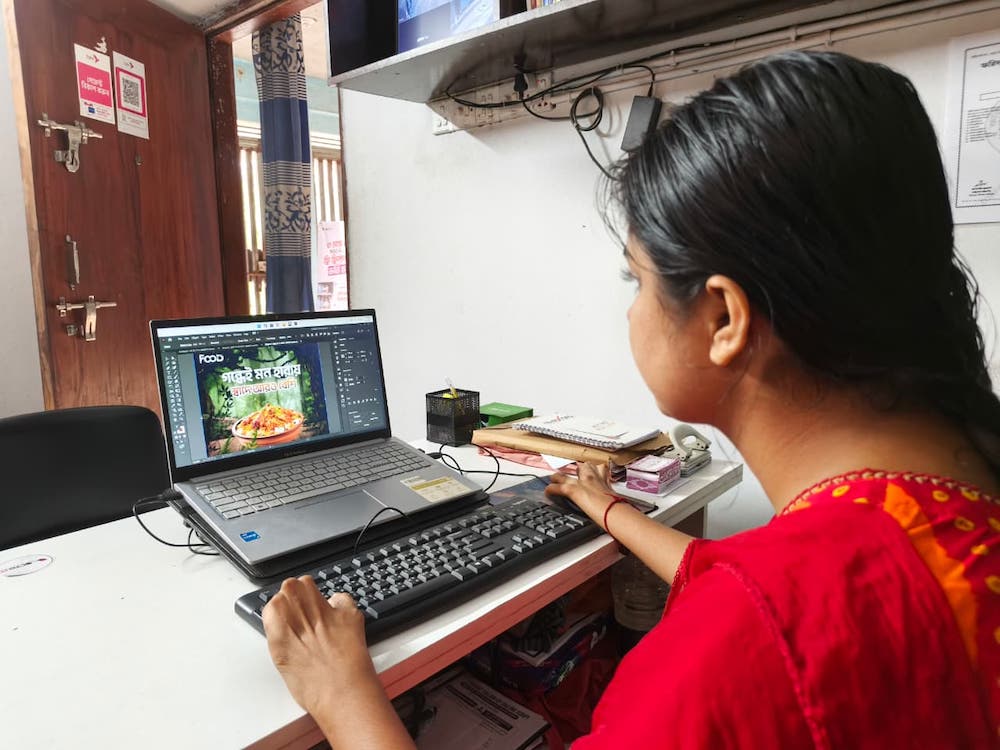
Loxme Roy at her office work station.
In Faridpur, Bangladesh, Loxme Roy’s journey demonstrates how digital skills can help young people overcome barriers and redefine what is possible.
Born without fingers on her hands, Loxme spent years being judged by assumptions about what she could not do. Her opportunity to learn graphic design through Songjog Foundation’s project, supported by the Internet Society Foundation’s Strengthening Communities/Improving Lives and Livelihoods (SCILLS) grant program, opened a new path.
The training gave her practical skills in tools such as Photoshop and Illustrator, but it also gave her something equally important: confidence.
“I joined hoping to learn one reliable skill but gained far more: training in Photoshop and Illustrator, and the confidence to use the Internet to learn, connect, and share my work with people far beyond my village,” she explains.
Loxme now works as a graphic designer and takes on freelance projects for local and international clients. Her work has expanded beyond her village, showing how meaningful Internet access and digital skills can create opportunities regardless of location or circumstance.
But her impact goes beyond her own career. Every project she completes challenges stereotypes about women with disabilities and inspires others to see digital skills as a pathway to independence.
“The SCILLS program didn’t just teach me design skills; it gave me the Internet, the confidence, and the proof that my work could speak louder than the barriers around my disability and my faith. Today, every project I deliver shows that skill, not circumstance, defines what a person can achieve, and I want every young woman who’s been told to expect less to know that same door is open to her,” says Loxme.
Building Community-Led Connectivity
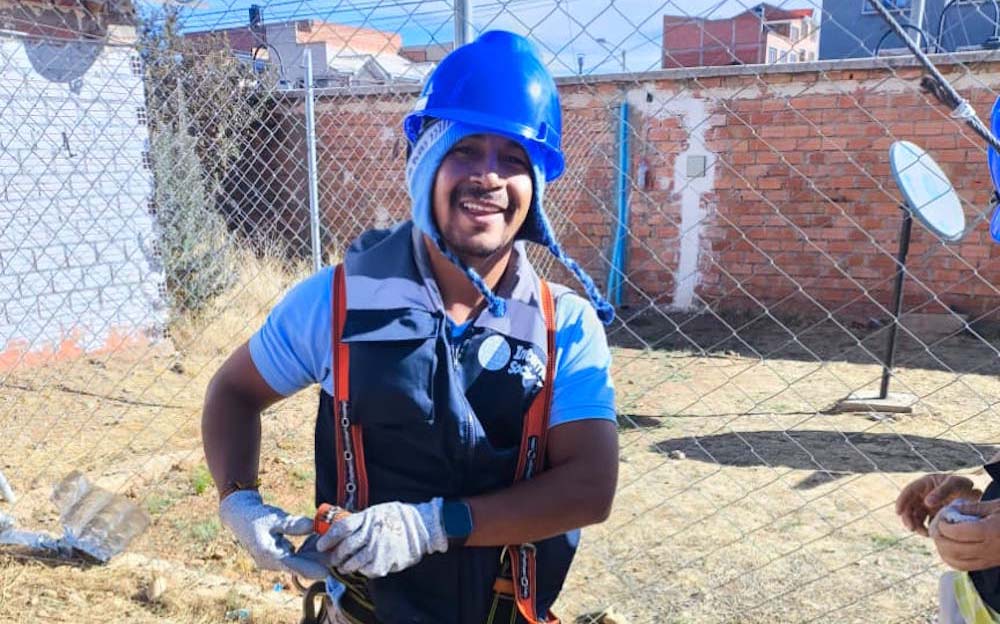
Luis Felip Ulloque Quintero deploys a community wireless network in Pueblo Nuevo Mejia.
For Luis Felipe Ulloque Quintero, the need for connectivity became clear when he returned to Pueblo Nuevo Mejía, a rural community in Colombia where many families lacked access to essential services, including electricity and the Internet.
Although telecommunications was not his professional background, Luis recognized that connectivity could create new opportunities for his community. Instead of waiting for someone else to solve the challenge, he began researching practical ways to build a solution.
Through determination and self-learning, Luis participated in the Internet Society-supported Technical Trainers Training under the Community-Centered Connectivity Program in Bolivia in 2025, where he gained knowledge about community networks, security, and sustainable connectivity approaches. He eventually deployed a community wireless network using satellite Internet and long-range wireless technology.
Today, residents from 30 families use the connection to access educational resources, communicate with family members, complete online services, and explore new opportunities. For Luis, the experience reinforced an important lesson: community-led solutions can have a lasting impact.
“My dream is that no child, young person, or adult should have to climb a mountain just to find a mobile signal or access the Internet. I believe connectivity should reach people where they live, because today Internet access represents opportunities for education, communication, entrepreneurship, and community development,” he says.
Different Contexts. Common Aspirations.
From discovering new possibilities through digital skills to building community networks, influencing Internet governance, and inspiring the next generation of innovators, these young leaders demonstrate that there is no single path to shaping the future of the Internet.
Their contexts differ, but their aspirations are shared: creating opportunities, strengthening communities, and ensuring that everyone can participate in an open, secure, and globally connected digital future.