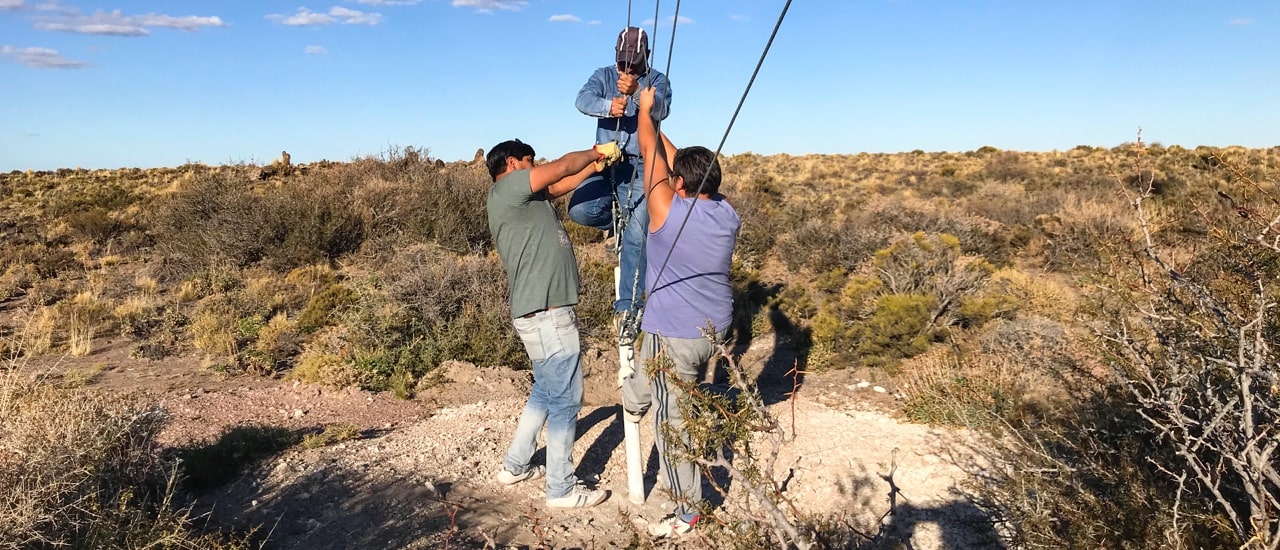

Patagonia, a region in Argentina made up of deserts, pampas, and grasslands, is known for its large areas of uninhabited territory. In the north sits the village of El Cuy, with just 400 residents. Far from the large urban centers, the people of El Cuy have adapted to the difficulties of accessing different services and technologies. The Internet is no exception, thanks to a new community network.
In several ways, the community network model represents the Internet model of networking come to life. Community networks are built and implemented by people, through collaboration – all stages of the process include the community working together. In the case of the El Cuy community network, support was also provided by the CABASE and the ENACOM.
For Christian O’Flaherty, the Internet Society’s senior development manager for Latin America and the Caribbean, Internet access has become a positive catalyst for community development. “The operation of this pilot program has motivated the residents to organize themselves into a cooperative. This step will allow inhabitants from El Cuy to have access to various fundings offered by actors such as ENACOM to increase the capacity of the Internet connection.”
Abel Martínez, a resident of El Cuy and a participant in the project, says that the community aims to maintain operation of the network and expand its capacity. This will be possible through the cooperative that is in the process of getting started: Coopesur.
The deployment of the network hasn’t been free of difficulties. From the transport of the supplies needed to install the antenna towers to the fulfillment of regulatory requirements, the inhabitants of El Cuy have mobilized to carry out these tasks. Simón Camú, member of Coopesur, points out that the group of people involved in the project has varied throughout the process, although the spirit has been kept alive since the first community network was connected to the Internet, in April of this year.
The benefits to the community have been obvious. Tamara Rodríguez and Rubén Pereira, residents of the town, point out the positive impact that connectivity offers them in terms of health, education, and access to information. Now it isn’t uncommon for the network to experience episodes of congestion, due to the high demand for use. Even the interviews I conducted with the community have occurred through instant messaging, something unimaginable before the network began to operate!
Learn more about community networks and how you can help close the digital divide!