
Online scams are at an all-time high, and digital tools have enabled them to become more sophisticated, more convincing, and more widespread.
A 2025 study by the Global Anti-Scam Alliance found that 7 in 10 adults worldwide have encountered a scam in the last year, with 13% facing these threats at least once a day.
Have you ever checked your email and found something like this?
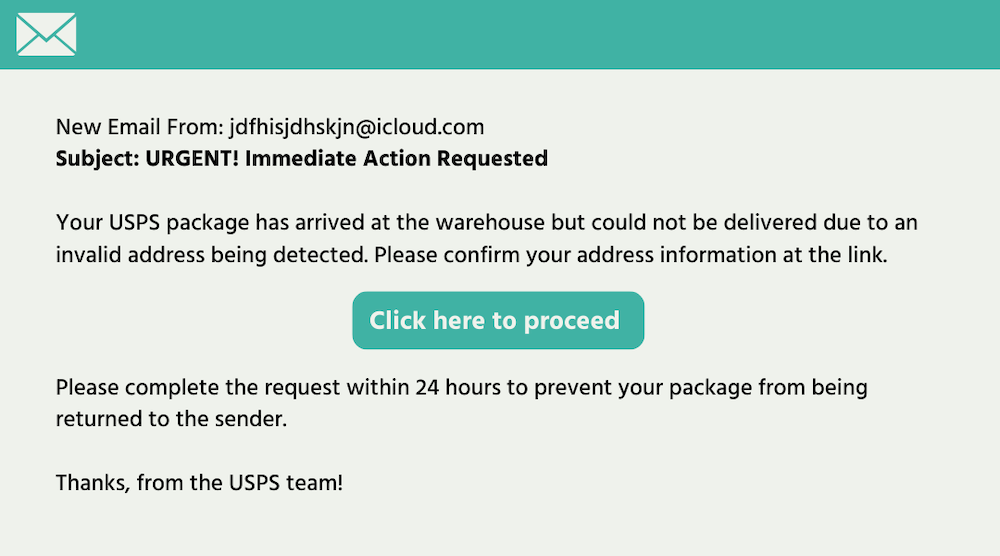
This type of message is a common scam. Designed to deceive, they pose as legitimate entities and convince people to share sensitive personal information, like social security numbers, account passwords, and credit card details.
From fraudulent job listings to malicious links, fake accounts, and phishing emails, these scams can feel unavoidable, and put people at risk of financial loss, identity theft, and privacy breaches.
But luckily, with the right information, you can learn how to identify online scams and keep yourself safe. Let’s dissect this scam and take a look at some common warning signs.
Sense of Urgency
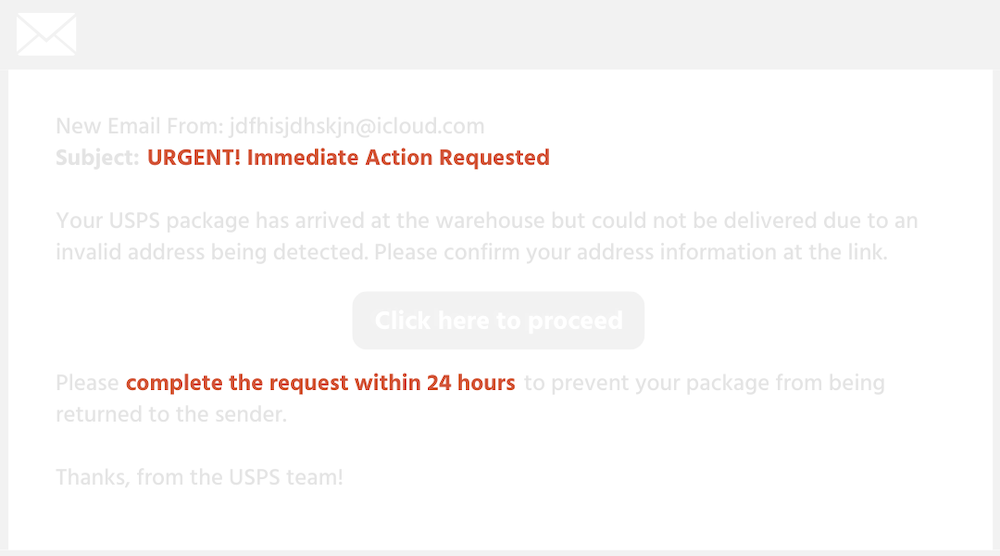
Many scam messages create a false sense of urgency by framing a request as time sensitive. Trigger words like “overdue,” “late,” and “immediate” can create a feeling of pressure or even panic.
Messages may also threaten negative consequences to scare people into following instructions—your package will be returned, law enforcement will get involved, or you will be charged late fees.
By making people think they need to act now, scams encourage victims to jump into action before they can think things through.
The next time you receive a message like this, don’t let yourself get intimidated and don’t rush to react. Allow yourself to take a moment. In fact, Take9.
Questionable Sender
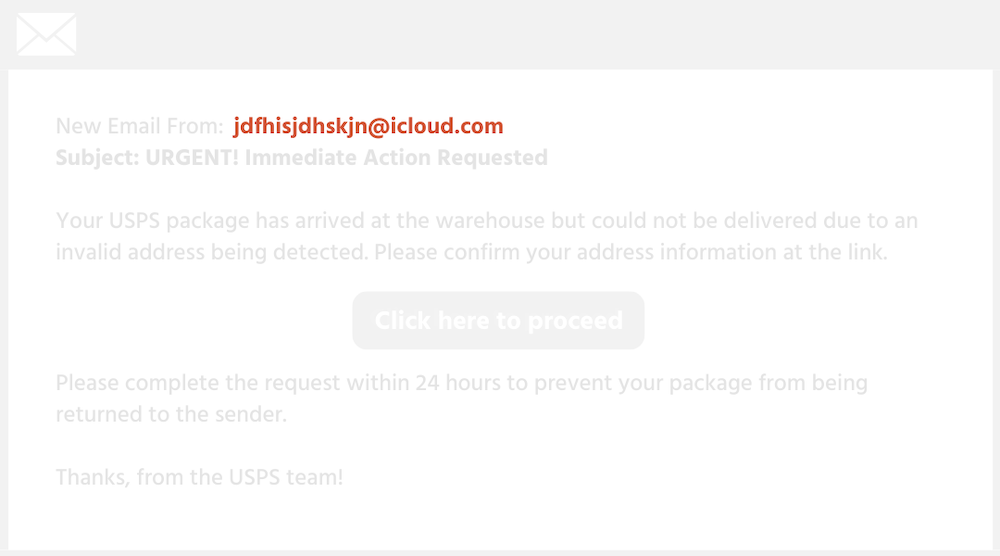
Some people aren’t who they say they are, so it’s important to look at where your message is coming from.
An email address should match the person or organization it claims to represent. For example, an email from USPS would end with “@usps.gov.” However, scammers often use “lookalike” letters that are visually identical to the real thing but lead to fake sites.
Because visual tricks can fool us, it is always safer to avoid clicking links in messages. Instead, opt to visit an official website or app directly to check your information. Many organization websites also list a phone number or support email. This ensures you are interacting with the authentic organization.
If you receive a direct message from a social media account, look at the account, profile photo, followers, and posts. If anything is particularly sparse or doesn’t match the information in their message, the account owner may be trying to scam you. Popular organizations and public figures will also typically have verified accounts.
Suspicious Link
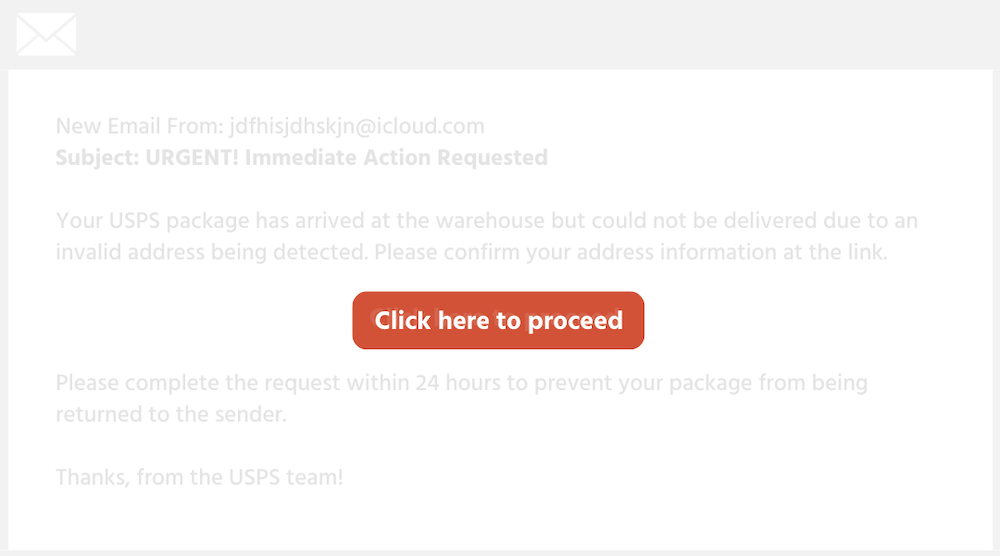
Interacting with a link in a scam message can lead to identity theft, take you to a fraudulent website, or even download malware onto your device.
While some links look like random characters, others use buttons or “shorteners” to hide their true destination, making them nearly impossible to verify by sight alone.
Instead of trying to decode a link, the safest habit is to bypass it entirely. Use a trusted app or type an official address directly into your browser to ensure you are navigating the Internet safely.
Requests for Information
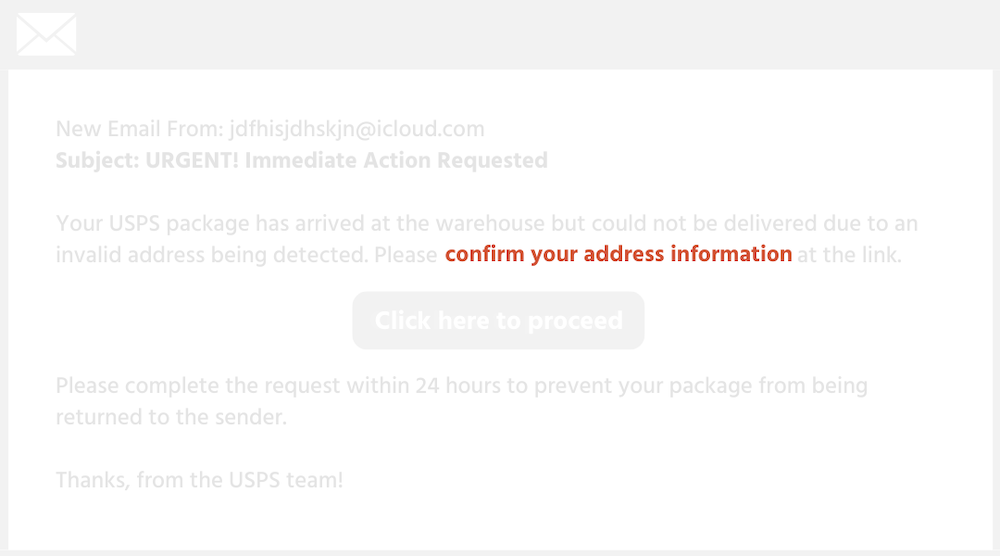
Receiving money or personal information is the goal of most scams. So, if you receive a message requesting either of those, you should always be extremely cautious.
Scammers often pretend they need to verify your identity to perform a service. This can include asking you for your social security number or answers to your security questions.
They may also ask you to confirm your financial information to pay a nonexistent bill or confirm your identity through a “refundable” bank transfer.
Unless it is with a reputable, trusted source over a secure connection, always be wary of sharing your personal information online. Your social security number, credit card number, address, date of birth, bank account number, and account passwords are all examples of information scammers might try to steal. Try and keep them as private as possible.
Staying Safe Online
Online scams are an unfortunate reality in our digital world, eroding safety and security, creating fear, and decreasing trust in the Internet. Education is our strongest weapon against it, and now, the next time someone tries to target you, you’ll know some of the most common warning signs to look out for.
The Internet is for everyone. Don’t let cybercriminals prevent you from accessing the wealth of information and opportunities online.