


On 18 December 2013, the UN General Assembly adopted resolution 68/167 on the right to privacy in the digital age [1], sending a clear message to the international community that the right to privacy applies online as well as offline.
Recently, the Third Committee adopted a second resolution on the right to privacy in the digital age [2] brought to the UN by Brazil and Germany and sponsored by the countries illustrated in the map.
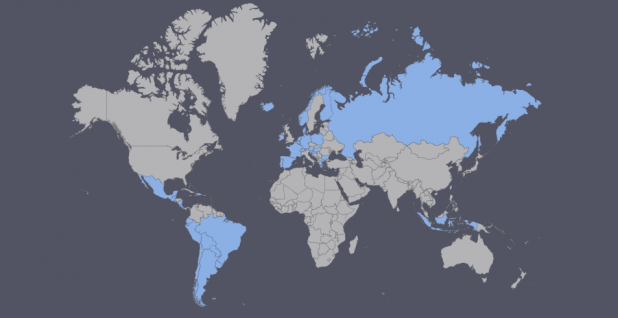
Map produced using http://www.amcharts.com
The resolution emphasizes that unlawful or arbitrary surveillance or interception of communications violates the right to privacy. Significantly, the resolution also formally recognises that metadata can have a privacy impact, and that even the mere collection of data can violate the right to privacy.
There is a call to member states to take measures to stop and prevent surveillance-related privacy violations, echoing the call in the 2013 resolution. The 2014 resolution also goes a step further and calls for member states to offer individuals whose privacy rights have been violated by unlawful or arbitrary surveillance with access to an effective remedy, consistent with international human rights obligations.
Now that the position of the supporting member states has been made clear in these resolutions, it is important to consider what those principles mean in practice. In this regard, the Internet Society strongly supports the significant progress that has been made in the UN on the issue of pervasive surveillance, but calls upon member states, in partnership with all stakeholders, to articulate what is (or is not) unlawful or arbitrary surveillance – to consider the practical meaning of conditions such as “necessary”, “proportionate” and “not arbitrary” in that context.
For the Internet Society, the key criterion here is legitimacy. To be legitimate, a surveillance policy must not only be legal: it must also be demonstrably necessary, proportionate and fair. Since “fairness” is a subjective quality, demonstrating fairness relies on other factors which the Internet Society has consistently championed: transparency, accountability, and appropriate representation of the rights and interests of all stakeholders.
We also believe there should be open debate on how to protect Internet users from unlawful or arbitrary surveillance.
[1] United Nations General Assembly: Resolution adopted by the General Assembly on 18 December 2013
[2] United Nations General Assembly: The right to privacy in the digital age