
The US connectivity landscape is changing. The past five years have shown tremendous growth in the work of bringing all Americans online. Programs have focused on increasing access through broadband infrastructure investments and developments. Today, we find ourselves at a new stage in the work toward ensuring Internet for all.
This work can be particularly challenging under the shifting political landscape. Digital inclusion requires advocating for communities that often go unnoticed, and many are working to address the needs of those large parts of our society that don’t have meaningful access to connectivity.
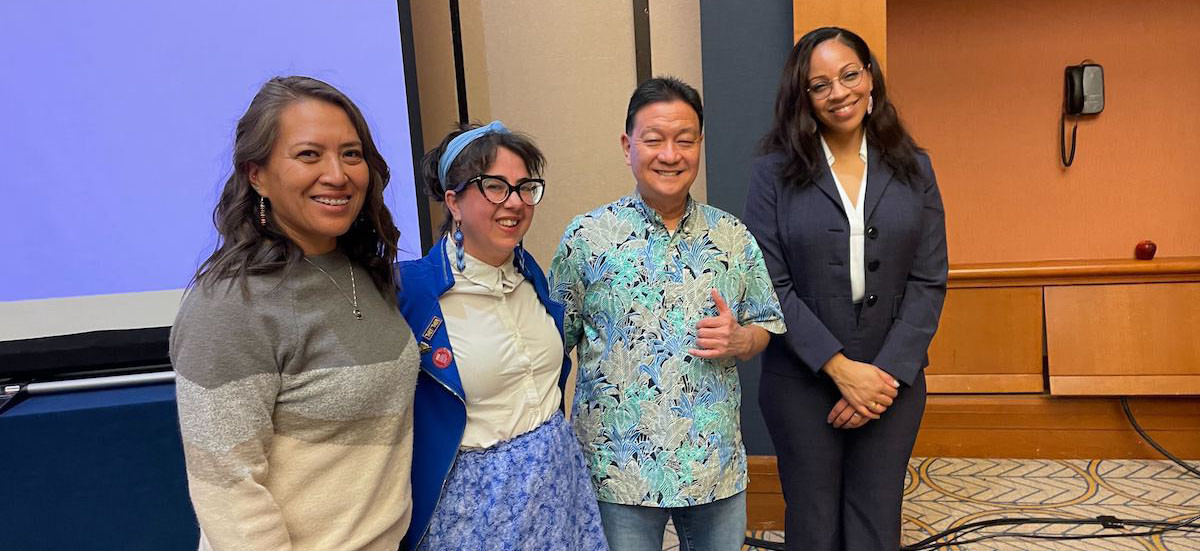
This year, at the annual Net Inclusion conference, I had the opportunity to host a workshop to discuss our community-centered connectivity model and how it can help advance connectivity efforts in Indigenous communities across the country.
The Community-Centered Connectivity Model
The Digital Divide Index in one study looks at factors such as available infrastructure and socioeconomic status to determine how a community fares in digital inclusion. As you will see on most maps filtering for digital inclusion, rural and Tribal areas are among those with the highest need. Networks deployed by and with communities will result in better outcomes in addressing meaningful connectivity.
In keeping pace with the communities we partner with, we have advanced our connectivity work. In 2025, we shared the community-centered connectivity (CCC) model, which focuses on connectivity solutions built for, with, or by local communities themselves. These solutions are not imposed from outside, but instead designed with direct involvement from the people who will use and maintain them.
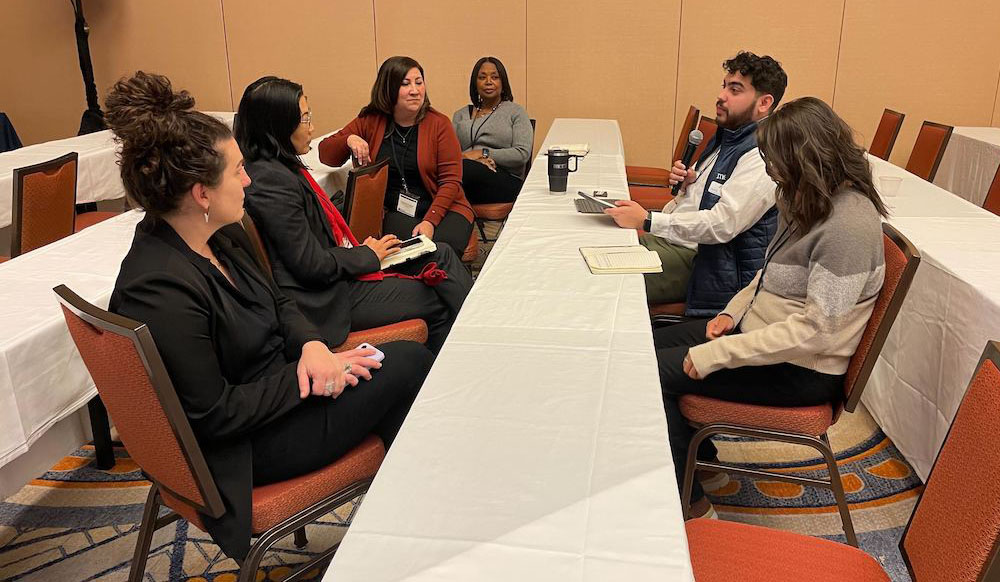
The workshop brought together a range of practitioners from across the field, and what we heard from participants is that it is more important than ever to remain timely and relevant in the work we do. One participant described our work as taking a journey with the communities we serve and needing to move at the pace of our partners. We must be agile and flexible in addressing unique barriers for differing communities.
We implement the CCC model with the understanding that there are three key elements we must consider to achieve connectivity:
Availability includes the technology and infrastructure necessary to bring connectivity solutions.
Affordability is a key aspect in ensuring that the members of the newly connected community can financially access the connectivity solution that is available.
Adoption considers the skills and capacity the community needs to engage with the newfound connectivity. If you are missing any of these key pieces, connectivity cannot meaningfully be achieved.
As practitioners, we understand that we have a critical role to play in collaborating with communities on their whole connectivity journey. Achieving Internet access is just one part of the process. We achieve meaningful connectivity by incorporating multiple facets into how we think about and approach connectivity.
Meaningful connectivity includes:
- Quality
- Availability
- Affordability
- Devices
- Skills
- Security
Applying This Model to Indigenous Communities
For Indigenous communities in the US, this process has played out in a unique way in recent years. Many communities began their connectivity journey through federal programs such as the Rural Tribal Window Program, providing spectrum allocations, and the Tribal Broadband Connectivity Program, focused on fiber deployments. However, it is important to note that not all Tribes received the investments needed to build out their networks. The connectivity gap persists among many Tribal communities, especially smaller and more remote communities.
While many Tribes are in the later stages of building out their networks, we are working to continue the conversation. Once connectivity is achieved, what are the next steps to ensure that the Internet that is now here, is also accessible and utilized?
Our discussion at Net Inclusion focused on Tribal communities, but given the advances of newly connected communities across the US, the CCC model is applicable in all communities. We discussed the current state of connectivity for many rural and Tribal communities across the country and how meaningful connectivity plays a role (or has not played enough of a role). There are passionate and determined practitioners across the country working toward digital inclusion.
There were many thoughts and new ideas in the room about how the CCC model could be implemented in new communities. Some shared about the fiber networks that are nearing completion in their Tribal communities while others shared about the digital inclusion needs for marginalized groups in rural communities.
Having spaces to continue coming together to develop creative solutions to the digital divide is one of the highlights of Net Inclusion. Sharing knowledge, lessons learned, new insights, new technologies, and impact stories from communities themselves provides inspiration to all involved.
It was a joy to share in these discussions with other such passionate, talented individuals doing the work around the country. It was a reminder that the work continues, no matter the social or political climate. It continues because the communities that we are collectively working to reach are counting on advancing efforts. Whether this be the work of bringing connectivity solutions to the unconnected or ensuring devices reach low-income areas, the work of moving forward together takes everyone.