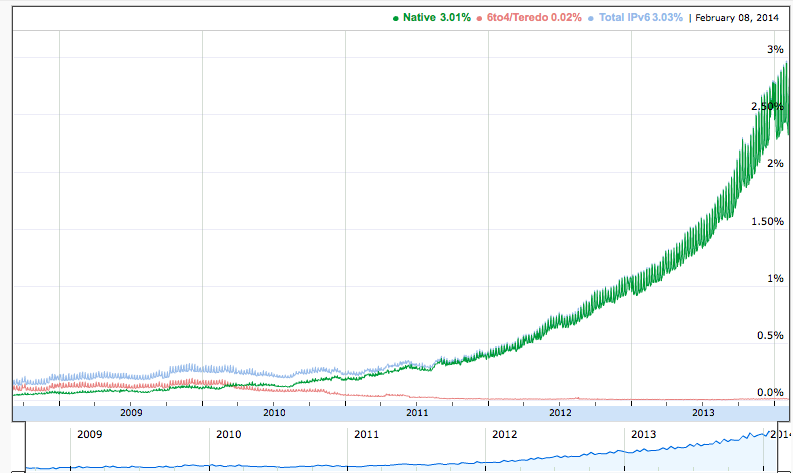

Can we get more operators to share their IPv6 measurements? How many mobile operators are using an IPv6-only strategy for their networks? These were two of the questions we found ourselves discussing when we participated in the v6 World Congress in Paris a couple of weeks ago. I presented updated World IPv6 Launch statistics (embedded below) and actively listened to others in the industry discuss where they were, are, and will be with their IPv6 deployments. After the event, Alain Fiocco wrote a Cisco blog post summarizing the contents of the World IPv6 Congress and important next steps.
I’d like to call attention to two specific aspects of what was discussed there: operator perspectives on IPv6 traffic and IPv6 in mobile networks.
Alain points out that network operators who have turned up IPv6 would like to see more IPv6 traffic, which obviously requires more content being enabled on IPv6. We agree. It would be very helpful for operators to share their IPv6 measurements so the world can see what kind of IPv6 traffic is observed on a v6-enabled network. Martin Gysi of Swisscom last month wrote a guest post for our blog where he described what kind of IPv6 traffic he sees and where it is coming from. We ask others to do the same. If you operate a network that has IPv6 enabled, please share your measurements with the rest of us. It has a great impact on folks considering the timeline for their own deployments to see what to expect when they do enable IPv6.
Alain also called attention to the fact that several mobile operators made public statements about their plans to transition their networks to IPv6 using an IPv6-only strategy with 464xlat to get to content that hasn’t yet been enabled for IPv6. This is the strategy that T-Mobile in the United States is using and we report increased IPv6 traffic in their network each month (18% last month) in our World IPv6 Launch measurements. It is a great method for getting IPv6 deployed in a mobile network with a clear path to alleviate pain from lack of public (and private!) IP address space for growing networks.
I’d love to hear from you if you’re interested in contributing more operator perspectives on IPv6 networks, or if you’re a mobile operator working on your IPv6 transition. Either leave a comment here, or on our Twitter, Facebook, or Google+ channels!