Network and Distributed System Security (NDSS) Fellowship > 2025 Fellows
2025 Fellows
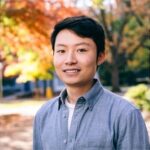
Adrian Shuai Li (China)
I research artificial intelligence (AI) and cybersecurity at Purdue University.
NDSS Paper: Revisiting Concept Drift in Windows Malware Detection: Adaptation to Real Drifted Malware with Minimal Samples

I am a PhD student in computer science at Purdue University, working under the guidance of Professor Elisa Bertino. Originally from China, I came to Purdue after completing my master’s degree in Canada.
My passion lies at the exciting intersection of security and machine learning. I am particularly interested in the potential of AI-based technologies to strengthen defenses against cyber threats.
In my free time, I enjoy traveling, spending time with family and friends, and hanging out with my cat.

Almajd Zunquti (Saudi Arabia)
I research cybersecurity at University of Southern California’s Information Sciences Institute with Professor Mirkovic, focusing on how tech security impacts real people.
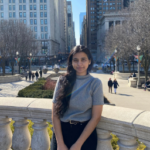
I am a PhD student at the University of Southern California (USC) and a researcher at USC Information Sciences Institute (ISI), where I work with Professor Jelena Mirkovic. In our lab, we study different areas of cybersecurity, and I am especially interested in how these fields affect people and their everyday lives.
My background is in computer security. I enjoy solving problems that make technology safer and easier to use. I am particularly interested in the intersection of technology and human behavior, such as designing systems that are both secure and user-friendly.
I am motivated by the opportunity to give back, starting with my community, which has always supported me, and extending my efforts to help others around the world. If my work or actions leave a positive impression on someone, that is enough for me.
In my free time, I enjoy hiking in nature, as it brings me peace and energy. I also love meeting new people, which helps broaden my perspective and keeps my curiosity alive.

Ayushi Sharma (US)
I’m a Purdue ECE PhD student researching memory-safe languages, ML security, and supply chain risks while hacking CTFs and reverse engineering systems.
NDSS Paper: VeriBin: Adaptive Verification of Patches at the Binary Level

I am a PhD research student in the Department of Electrical and Computer Science at Purdue University.
My research interests include cybersecurity, encouraging the adoption of memory safe programming languages, machine learning security, and supply chain security. I also enjoy participating in CTFs, reverse engineering binaries, and exploiting vulnerabilities.
When I’m not working, I enjoy singing and working on digital graphic design projects.

Christopher Ellis (US)
I research networking vulnerabilities and privacy tech as a PhD candidate at Ohio State University while leading teams to tackle tough security challenges.
NDSS Paper: Deanonymizing Device Identities via Side-channel Attacks in Exclusive-use IoTs & Mitigation

I’m passionate about researching, building, and leading teams to solve critical challenges requiring creative solutions. Currently, I’m researching networking vulnerabilities and privacy technologies as a PhD candidate at the Ohio State University under Professor Zhiqiang Lin, where I received my BS and MS degrees in computer science with magna cum laude honors as a Tau Beta Pi scholar.
Previously, I’ve held positions as space cyber principal investigator at Battelle Memorial Institute and senior principal cyber engineer and site lead at Raytheon CODEX. I enjoy volunteering for multiple employee resource groups and guest speaking at over 10 universities and industry panels to date.
Prior to university, I was a professional ballet dancer for 12 years and represented the USA in international ballet competitions. I’m grateful for the knowledge shared with me by my colleagues, teachers, and mentors and feel it’s a true honor to pass it on and inspire the next generation to do amazing things!
I also love spending time on the dance floor, hiking, camping, and snowboarding high up in the mountains, and scuba diving in the deep ocean depths—I recently completed my PADI Divemaster certification!

Connor Everett Glosner (US)
As a research assistant at Purdue University, I examine how hardware initialization hands off control to operating systems, hunting for security gaps in these critical transitions.
NDSS Paper: FUZZUER: Enabling Fuzzing of UEFI Interfaces on EDK-2

I am a research assistant in the Electrical and Computer Engineering Department at Purdue University for the PurS3 lab. My research focuses on low-level hardware-software interactions, primarily in the security of the boot process.
My background is with UEFI firmware and bootloaders. I specifically focus on how the hardware is initialized and control is passed between different phases of the system startup, including how control is handed off to the operating system.
In my free time, you can find me traveling around with my dog and trying to stay active.

Derin Cayir (Turkey)
I’m a computer science PhD student at Florida International University researching machine learning applications for XR security and privacy.
NDSS Paper: Speak Up, I’m Listening: Extracting Speech from Zero-Permission VR Sensors

I am a computer science PhD student at Florida International University. Originally from Turkey, I now reside in the US for my studies.
My academic journey began at Bilkent University in Ankara, where I earned a bachelor’s in electrical and electronics engineering. Currently, my research focuses on utilizing machine learning techniques to enhance security and privacy within extended reality (XR) technologies.
In the summer of 2025, I will join Meta as a machine learning research scientist intern, focusing on wearable technologies.
This opportunity aligns closely with my professional ambitions and my personal commitment to improving digital accessibility—a passion driven by my experiences as a hard-of-hearing person. In my leisure time, I love to document my travels, explore diverse cuisines, and watch Turkish series with my dog.

Dzung Pham (US)
I’m a PhD student at University of Massachusetts Amherst researching privacy-preserving AI/ML systems, focusing on secure on-device language models under Professor Houmansadr.
NDSS Paper: RAIFLE: Reconstruction Attacks on Interaction-based Federated Learning with Adversarial Data Manipulation

I am a third-year PhD student in computer science at the University of Massachusetts Amherst working under the supervision of Professor Amir Houmansadr. I am interested in developing secure, private, and trustworthy artificial intelligence and machine learning (AI/ML) algorithms and systems. Currently, I am researching how to enable on-device large language models to reliably help users protect their privacy when navigating the digital world.
Before starting my PhD, I worked as a software engineer at Meta, Inc. (Facebook), where I applied machine learning to protect users on Facebook Marketplace from fraud, scams, and harassment.
In my free time, I enjoy playing chess and the classical guitar.

Jialiang Dong (Australia)
I’m a cybersecurity PhD candidate at University of New South Wales researching supply chain security and AI-powered defenses, with past work on adversarial AI attacks.
NDSS Paper: Enhancing Security in Third-Party Library Reuse – Comprehensive Detection of 1-day Vulnerability through Code Patch Analysis

I am a PhD candidate at the University of New South Wales. I specialize in cybersecurity research, with a focus on software supply chain security and mobile security. I am also exploring security solutions supported by large language models.
My academic background is in computer science, and I have research experience in AI applications and related security issues, including adversarial examples and backdoor attacks. These experiences have significantly contributed to and inspired my current research.
Outside of academia, I am passionate about photography, particularly film photography.
I enjoy collecting vintage cameras from the last century and using them to document moments from my life. In addition to research, I am happy to exchange ideas and share experiences about photography, travel, and more.

Jian Cui (US)
I research AI-driven cybersecurity at Indiana University Bloomington, hunting threats from social media to blockchain while now securing chatbots against emerging attacks.
NDSS Paper: Tweezers: A Framework for Security Event Detection via Event Attribution-centric Tweet Embedding

I am a graduate student and research assistant at Indiana University Bloomington, specializing in artificial intelligence and security. My research focuses on leveraging AI to enhance cyber threat intelligence, including security event detection from social media, information gathering from the dark web, and improving phishing and campaign detection on blockchain.
Recently, with the rise of large language models (LLMs), my work has shifted toward addressing threats to AI systems and applications, such as chatbots, ensuring their resilience and secure deployment in real-world scenarios. When I’m not working, you’ll find me at the CrossFit gym, honing my gymnastics movements and Olympic lifting skills.

Joonkyo Jung (Korea)
I research GPU driver security at Yonsei University, developing fuzzing techniques to boost reliability.
NDSS Paper: Moneta: Ex-Vivo GPU Driver Fuzzing by Recalling In-Vivo Execution States

I am a PhD student in the Secure Systems Lab at Yonsei University, South Korea, where my research focuses on GPU drivers, employing various advanced approaches to enhance their security and reliability. I am excited to present our work on GPU driver fuzzing, which I co-first authored with a colleague, at NDSS Symposium 2025.
Positivity is a core value that shapes both my professional and personal life. I focus on what I can control, embracing challenges with a resilient mindset that has been instrumental in my journey.
Outside the lab, I find joy in cycling. There’s something invigorating about the rhythm of the ride and the feel of the wind, which provides both a sense of freedom and a chance to recharge.

Jung-Woo Chang (Korea)
My research at UC San Diego focuses on uncovering security vulnerabilities in next-generation systems and designing robust defenses to protect against adversarial attacks.
NDSS Paper: Magmaw: Modality-Agnostic Adversarial Attacks on Machine Learning-Based Wireless Communication Systems
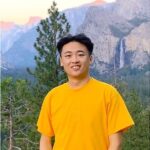
I’m a final-year PhD student specializing in wireless and network security, based at UC San Diego. My research focuses on uncovering security vulnerabilities in next-generation systems and designing robust defenses to protect against adversarial attacks.
Outside the lab, I enjoy working out, hiking, and watching Netflix, which helps me stay inspired and grounded. Feel free to connect with me if you’re interested in collaborative research.

Kaiyuan Zhang (China)
As a PhD student at Purdue University, my research interests focus on security and privacy in machine learning, recently in safe and responsible large language models.
NDSS Paper: CENSOR: Defense Against Gradient Inversion via Orthogonal Subspace Bayesian Sampling
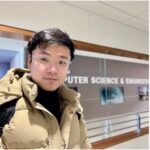
I am a PhD candidate in computer science at Purdue University. My research interests focus on security and privacy in machine learning, recently in safe and responsible large language models.
I will be on the job market this fall, during the 2025–2026 cycle.
Outside of research, I enjoy playing basketball and finding the perfect hit in tennis.

Keyan Guo (US)
My research at University at Buffalo thrives on merging diverse perspectives to tackle real-world cyber challenges in innovative ways.
NDSS Paper: I know what you MEME! Understanding and Detecting Harmful Memes with Multimodal Large Language Models

I am a PhD candidate in the Department of Computer Science and Engineering at University at Buffalo, supervised by Dr. Hongxin Hu. My background is in AI and cybersecurity, and I am strongly interested in developing AI-driven solutions to address real-world security challenges and enhance AI safety and robustness.
I enjoy collaborating with researchers from diverse backgrounds, which always inspires unique and exciting ideas!
I am passionate about exploring the world, especially savoring the food and music from different countries. I also enjoy outdoor sports like skiing, although I’m currently learning to snowboard.

Maryam Abbasihafshejani (US)
My primary research at the University of Texas at San Antonio focuses on generative AI security and spiking neural network security.
NDSS Paper: VoiceRadar: Voice Deepfake Detection using Micro-Frequency and Compositional Analysis
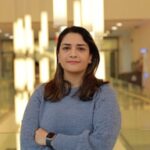
I am currently a third-year PhD candidate in computer science and a research assistant in the SPriTELab at the University of Texas at San Antonio. My primary research focuses on generative AI security and spiking neural network security.
I earned my master’s degree from Isfahan University of Technology, specializing in blockchain security.

Maryam Rostamipoor (US)
I research cloud security at Stony Brook’s Hexlab, building tools like KubeKeeper and LeakLess to harden Kubernetes and serverless platforms against modern threats.
NDSS Paper: LeakLess: Selective Data Protection against Memory Leakage Attacks for Serverless Platforms

I am a PhD candidate in the Computer Science Department at Stony Brook University, working in the Hexlab under Dr. Michalis Polychronakis. My research focuses on advancing cloud and Kubernetes security, where I design techniques to mitigate vulnerabilities such as data leakage and excessive permissions while enhancing secret management and securing serverless platforms. I’ve developed tools like KubeKeeper, which protects Kubernetes Secrets, and LeakLess, addressing memory disclosure vulnerabilities in serverless environments.
Previously, I led the Software Security Team at Sadad Electronic Payment Company, driving initiatives in penetration testing, secure coding, and hardening applications. My earlier work in binary analysis and system call filtering led to solutions that reduced system attack surfaces.
Passionate about protecting user data and strengthening system security, I’m driven by the challenge of tackling modern cybersecurity threats. Outside of work, I enjoy cooking, practicing yoga, working out, and spending time with friends, which keeps me inspired and grounded.

Qiyang Song (China)
I research cloud security at Stony Brook’s Hexlab, building tools like KubeKeeper and LeakLess to harden Kubernetes and serverless platforms against modern threats.
NDSS Paper: Silence False Alarms: Identifying Anti-Reentrancy Patterns on Ethereum to Refine Smart Contract Reentrancy Detection

I’m a PhD student at the Institute of Information Engineering, Chinese Academy of Sciences, specializing in cybersecurity. As an early-career researcher, I’m committed to making meaningful contributions to the cybersecurity community. I’m motivated by the challenge of developing innovative solutions to address the evolving security landscape.
I have a background in software and network security, and I’ve developed advanced defense mechanisms to safeguard data and programs across cloud and decentralized networks.
I’m currently particularly passionate about creating secure alarm systems that can quickly and accurately alert individuals to potential intrusions. I believe that security should seamlessly integrate with product functionality to create a safer digital environment.
When I’m not immersed in research, I’m at the gym, singing, or playing the guitar.

Robbie Dumitru (Australia)
As a PhD student at Ruhr University Bochum and the University of Adelaide, I research hardware security across two continents, analyzing side-channel vulnerabilities in semiconductors and USB connections through my dual background in electrical engineering and computer science.
NDSS Paper: On Borrowed Time – Preventing Static Side-Channel Analysis
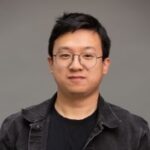
I am a PhD student at Ruhr University Bochum and the University of Adelaide. My research interests are in hardware security. Specifically, I investigate side-channel and fault injection security for semiconductors and peripheral connections like USB.
My background is in electrical engineering and computer science. I find security particularly interesting because it intersects many disciplines, from physics to psychology.
Despite the tough time differences for the latter, I enjoy playing and watching football. aliquip ex ea commodo consequat.

Runze Zhang (US)
My research at the Georgia Institute of Technology aims to dismantle large-scale threats through innovative computational approaches.
NDSS Papper: Hitchhiking Vaccine: Enhancing Botnet Remediation With Remote Code Deployment Reuse

I am a fifth-year PhD candidate in the School of Cybersecurity and Privacy at the Georgia Institute of Technology. Since 2020, I have been a research assistant in the Cyber Forensics Innovation (CyFI) Lab under the guidance of Professor Brendan Saltaformaggio. My research focuses on combining program analysis, graph theory, and machine learning to tackle large-scale cyber threats.
My work addresses a range of challenges, including global botnet takedowns, mobile malware forensics, and click fraud mitigation. Outside of academia, I enjoy cooking, hiking, and capturing the beauty of nature with my camera.

Ruyi Ding (US)
I research AI security at Northeastern University, using hardware techniques like side-channel analysis to strengthen neural network privacy and robustness for real-world applications
NDSS Paper: Probe-Me-Not: Protecting Pre-trained Encoders from Malicious Probing

I am a PhD candidate in electrical and computer engineering at Northeastern University. I work as a research assistant in the Energy-Efficient and Secure Systems Lab under Professor Yunsi Fei. My research focuses on securing AI systems, particularly improving neural network robustness and privacy and utilizing hardware security techniques like side-channel analysis.
My background in hardware security has given me a system-level perspective on AI safety. While I value technical expertise in AI architectures, what truly drives me is making these systems secure and accessible for real-world applications.
Outside of work, I enjoy cooking and baking. In my spare time, I often experiment with new recipes.

Sena Sahin (US)
I research human-centered cybersecurity at Georgia Tech, studying how both professionals and everyday users make security decisions to bridge the gap between theory and real-world practice.
NDSS Paper: Was This You? Investigating the Design Considerations for Suspicious Login Notifications
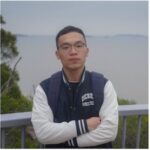
I am a PhD candidate in computer science at Georgia Institute of Technology, specializing in cybersecurity with a focus on the human factors in security and privacy. My research explores the challenges and decision-making processes of technical professionals in implementing secure and usable practices, as well as end-user behaviors related to usability and security.
Through my work, I aim to bridge the gap between security guidelines and their real-world application, identifying practical barriers and providing actionable solutions. I am particularly motivated by the opportunity to make cybersecurity more accessible and effective for both professionals and end users. Besides research, I’m a proud mom, and I love exploring the world anew through the curious eyes of my toddler.

Shushang Wen (China)
As a PhD student at the University of Science and Technology of China, my research interests lie in email security, public key infrastructure, and transparency.
NDSS Paper: Automatic Insecurity: Exploring Email Auto-configuration in the Wild

I am a PhD student at the University of Science and Technology of China, working under the guidance of Professor Jingqiang Lin. My research interests lie in email security, public key infrastructure, and transparency. Through empirical, data-driven studies, I aim to evaluate the real-world impact of security threats, providing actionable insights to the community and contributing to the advancement of Internet security.
I am particularly intrigued by security challenges that stem from human factors, such as misconfigurations. I believe that “everyone makes mistakes” and that any system involving human interaction is inherently susceptible to vulnerabilities. Understanding and addressing these weaknesses is a key focus of my work.
Beyond the lab, I am passionate about basketball and photography, both of which fuel my creativity and curiosity, offering fresh perspectives and balance in my life.

TianDong (China)
My research at Shanghai Jiao Tong University focuses on the intersection of computer security, machine learning, and cryptography, with a particular emphasis on addressing emerging threats in artificial intelligence and edge computing.
NDSS Paper: The Philosopher’s Stone: Trojaning Plugins of Large Language Models

I am a PhD candidate in computer science at Shanghai Jiao Tong University (SJTU), where I am advised by Professor Haojin Zhu. My research focuses on the intersection of computer security, machine learning, and cryptography, with a particular emphasis on addressing emerging threats in artificial intelligence and edge computing.
My work explores various topics, including backdoor vulnerabilities, data provenance, and privacy-preserving techniques for machine learning models. I am driven by curiosity and a commitment to making AI safer and more trustworthy for everyone.

Vishnu Asutosh Dasu (US)
I research trustworthy machine learning at Penn State, drawing from my industry experience in applied cryptography and hardware security to build robust AI systems for real-world applications.
NDSS Paper: Privacy-Preserving Data Deduplication for Enhancing Federated Learning of Language Models

I’m a PhD student in computer science at Penn State. I’m passionate about building safe and trustworthy machine learning systems. My research focuses on areas such as trustworthy machine learning, machine learning for security and privacy, and software security.
Before starting grad school, I worked as a security researcher in the industry and gained experience in applied cryptography, hardware security, and building trustworthy machine learning systems. My ultimate goal is to create machine learning technologies that are robust and safe for critical real-world applications.
Outside the lab, I love staying active and exploring the outdoors. Whether hiking, bouldering, or powerlifting, I’m always up for a physical challenge to push myself to the limit!

Weili Wang (China)
I design confidential computing systems at Duke University, using trusted execution environments and formal methods to build verifiably secure cloud infrastructures
NDSS Paper: WAVEN: WebAssembly Memory Virtualization for Enclaves
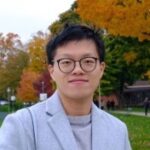
I am a first-year PhD student at Duke University with a background in computer security. My primary interest lies in designing confidential computing systems, particularly those enabled by trusted execution environments. I also focus on employing formal methods to verify the correctness of these systems.
I believe that advancements in confidential computing will significantly enhance the security and privacy of cloud infrastructures and end users, ultimately fostering a more trustworthy digital world.
Outside of my academic pursuits, I enjoy action movies, with the Ip Man and John Wick series being my all-time favorites.

Xiangmin Shen (China)
As a PhD candidate at Northwestern University, my research interests broadly include system security and security measurement.
NDSS Paper: Incorporating Gradients to Rules: Towards Lightweight, Adaptive Provenance-based Intrusion Detection
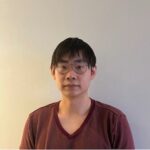
I am a final-year PhD candidate in computer science at Northwestern University, where I am advised by Professor Yan Chen. My research interests broadly include system security and security measurement. Currently, I am focused on enhancing system security by applying AI techniques for both defense and offensive strategies.
In addition to my research, I am passionate about promoting open and reproducible security studies. I aim to address challenges in benchmarking and evaluation to improve transparency and comparability within the field. I believe that shared knowledge and reproducible results are vital for advancing security research. In my free time, I enjoy running and have completed two marathons.

Xiangyu Guo (China)
I build security tools at University of Toronto, from web crawlers to REST API fuzzers, making web services safer so people can use them without worrying about hacks.
NDSS Paper: EvoCrawl: Exploring Web Application Code and State using Evolutionary Search

I am a PhD student in the Electrical and Computer Engineering (ECE) Department at the University of Toronto, focusing on system security. Over the past two years, I have been developing a web crawler designed to enhance the security of web applications. Currently, I am working on REST API fuzzing to improve the security and reliability of web services.
My background is in computer engineering, and I am passionate about making systems more secure and reliable, allowing users to enjoy their convenience without the fear of being hacked.
In my free time, you can often find me at the gym or horseback riding.

Xiaochen Zhu (US)
I research machine learning privacy at MIT, hunting vulnerabilities in algorithms while designing protocols to keep data secure
NDSS Paper: Passive Inference Attacks on Split Learning via Adversarial Regularization

I am a graduate student at MIT, pursuing a PhD in electrical engineering and computer science. My research focuses on data privacy, particularly the security and privacy aspects of machine learning. I aim to identify privacy vulnerabilities in various algorithms and systems and to design privacy-preserving protocols that enhance their security.
I am deeply passionate about data privacy and committed to advancing solutions that protect individual rights in an increasingly data-driven world. I believe we can build a future where privacy is not an afterthought but a fundamental principle, empowering individuals with greater control over their personal information.
Through my research, I strive to contribute to a world where the benefits of data-driven insights coexist with the protection of individual rights and freedoms.
Outside of my work, I have a strong passion for music, especially rock and indie genres. Some of my favorite bands include Vampire Weekend and Big Thief; their music never fails to inspire me. I also enjoy watching movies, particularly those with thought-provoking stories.

Xuanji Meng (China)
I push the boundaries of blockchain security at Tsinghua University, developing zero-knowledge proofs and distributed cryptography to make decentralized systems both private and trustworthy.
NDSS Paper: Rondo: Scalable and Reconfiguration-Friendly Randomness Beacon
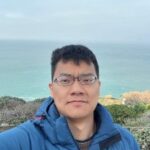
I am a cryptography researcher and PhD candidate at Tsinghua University in Beijing, China, where I focus on blockchain technologies, secure multiparty computation, and applied cryptography. My work involves exploring advanced cryptographic techniques, such as zero-knowledge proofs and distributed cryptography, to enhance privacy and security in decentralized systems.
With experience as a researcher at organizations like Shandong Institute of Blockchain and as the host of ZKAVE, a podcast dedicated to cryptography and Web3 technologies, I am committed to knowledge-sharing within the cryptography community.
My efforts extend to teaching cryptography courses on platforms like DoraHacks, where I engage learners in cutting-edge topics. I am passionate about leveraging cryptography to build trust and transparency in digital systems, and I thrive on collaboration and problem-solving in the field.
When I’m not immersed in research, I enjoy hosting podcasts and sharing my enthusiasm for cryptographic advancements with others.

Yan Pang (United States)
I research trustworthy machine learning at University of Virginia, working to make AI systems more reliable while collaborating with curious minds across disciplines.
NDSS Paper: Towards Understanding Unsafe Video Generation
I’m a third-year PhD student at the University of Virginia, specializing in trustworthy machine learning. While my focus is on computer science research, my interests extend well beyond the world of code. You can often find me on the basketball court or in the swimming pool, where I believe staying active not only keeps my mind sharp but also helps me connect with new friends.
I’m passionate about doing meaningful research and collaborating with curious minds from all walks of life. Ultimately, I aim to contribute to the field of machine learning in a way that fosters trust and innovation—while never forgetting the importance of staying healthy and having fun along the way.
Disclaimer: The Internet Society reserves the sole right to decide if an applicant proposal meets the eligibility requirements.
Image credit: © Wes Hardaker