Pulse Research Fellowship and Mentorship > 2026 Fellows
2026 Fellows and Mentors
Fellows
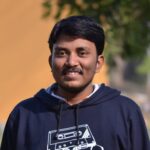
Amit Samanta
(United States)
I am a PhD student at the Kahlert School of Computing at the University of Utah, working with Professors Ryan Stutsman and Rohan Basu Roy. I’m associated with the Utah Scalable Computer Systems and SysHPC Labs. I build smarter scheduling and resource management techniques for cloud, high-performance computing, and networked systems to make them faster and more sustainable. My background is in computer science, with a master’s from IIT Kharagpur, India. I’ve worked at places like Lawrence Livermore and Argonne National Labs, HPE Labs, Yale University, and MPI-SWS in Germany.
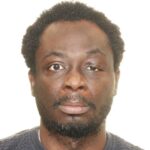
Hospice Alfred Afolabi Arouna
(Norway)
I am a PhD student in the final year of my program at OsloMet and SimulaMet in Oslo, Norway. My research lies at the intersection of Internet measurement and large-scale data analysis. Specifically, my work characterizes various DNS datasets and highlights the crucial role of reverse DNS in ensuring that DNS functions well as a whole, which supports essential user activities. Before joining SimulaMet, I had 10 years of experience working for the largest private Internet service provider (ISP) in Benin, where I held several technical positions, including software engineering and critical infrastructure management.

Hugo Rimlinger
(France)
I am a PhD student in computer networks at LIP6, Sorbonne Université. My research focuses on Internet security and cartography, but what I enjoy most is building tools and methodologies to uncover hidden yet deeply important insights into how the Internet works. I’m still early in my research journey, but I’m eager to grow and pursue a long academic career. I’m now involved with the Internet Society and its Internet Society Pulse program, which I see as a wonderful opportunity to connect and collaborate with others to build a more secure and accessible Internet.
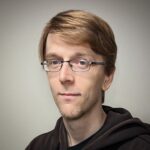
Malte Tashiro
(Japan)
I am a researcher at the IIJ Research Laboratory and a PhD candidate at the Graduate University for Advanced Studies in Japan. My research focuses on Internet measurements. I analyze the structure of the Internet to improve its resilience. The complexity of the Internet makes it easy to miss dependencies, and my goal is to find them. I’m also a big proponent of open data, and most of my work is open source. Given the huge number of Internet-related datasets, I’m participating in a project that makes them more accessible. I believe open data really shines once it’s used to create insightful outputs, and I strive to make this easier for everyone.
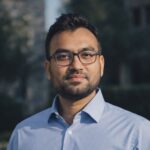
Syed Tauhidun Nabi
(United States)
I am a PhD candidate in computer science at Virginia Tech, where I broadly study computer networks and Internet measurement. My research focuses on bettering independent visibility into critical Internet infrastructure using large-scale public measurement data. I’m currently working on NetBreakout, a project that maps mobile network egress infrastructure to better understand resilience, structural risk, and how outages impact communities. Before starting my PhD, I worked in the telecommunications industry on LTE network optimization and performance analytics. This shaped my interest in bridging operational network practice with public-interest research.
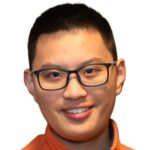
Weitong Li
(United States)
I am a postdoctoral researcher at Virginia Tech. My work focuses on measuring and securing Internet infrastructures. My research combines large-scale security measurement, protocol design, and policy analysis to understand how core Internet infrastructure behaves in practice and how it can be strengthened against emerging threats. My research lies at the intersection of systems, security, and governance. I care deeply about making Internet infrastructure more transparent, accountable, and resilient for everyone everywhere. Outside of research, I enjoy hiking, especially in the Appalachian Mountains.

Yevheniya Nosyk
(France)
I am a cybersecurity researcher at KOR Labs, where I work at the intersection of Domain Name System (DNS) operations, large-scale Internet measurements, and network security. I divide my time between academic research and outreach to the operational community, giving analysis and data on real-world deployments. I earned a PhD in computer science from Université Grenoble Alpes, where I studied DNS as both a core component of Internet infrastructure and a large-scale distributed measurement platform.

Yu Shing Hung
(Thailand)
I am transitioning into AI safety research after earning my PhD from the University of Cambridge. I’m a multiple-time book author and the founder of AI in Society. I expect to start a postdoctoral fellowship at Chulalongkorn University. My career focus is to shift from being a researcher to a researcher-builder, bridging the gap between society and technology. Outside of conducting social science, applied policy, and technical AI research, I spend a lot of time writing and reading.
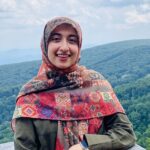
Zahra Yazdani
(United States)
I am a third-year PhD student in computer science at Georgia Tech, where I study Internet measurement and network security. My research focuses on how Internet infrastructure and services evolve over time, especially during and after real-world events like outages. Through large-scale measurements and data-driven analysis, I examine how disruptions and configuration changes affect traffic flows, service availability, and network behavior.
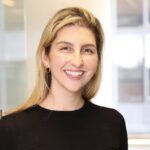
Zeynep Arslan
(France)
I am currently a master’s student at Sorbonne Université studying computer science, where I also work as a researcher mapping global network topology and routing patterns. My background is in biomedical engineering and cloud infrastructure, with nearly 10 years of industry experience. I’ve worked in consulting, FinTech, and HealthTech. I’m especially interested in distributed systems, data visualization, and the way networks shape how information moves around the world. I believe in building things that are robust, well-documented, and maintainable for the humans who inherit them.
Mentors
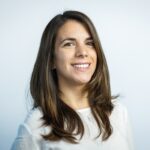
Cecilia Testart
(United States)
I am an assistant professor at the Georgia Institute of Technology (Georgia Tech), where I hold a joint appointment between the School of Cybersecurity and Privacy and the School of Computer Science.

Ioana Livadariu
(Norway)
Ioana Livadariu is a research scientist at SimulaMet in Norway, focusing on network measurement and telemetry. She develops novel techniques for measuring and analyzing Internet routing and topology.
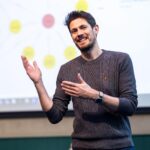
Romain Fontugne
(Japan)
Romain Fontugne is the deputy director of the IIJ Research Laboratory, where he leads the Internet Health Report and Internet Yellow Pages projects. He’s also an active member of the WIDE Project. His current research interests include network measurement, networked data analytics, and network security.
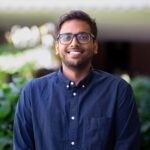
Udit Paul
(United States)
I am a research scientist at Cisco ThousandEyes, where my work focuses on event detection, anomaly identification, and performance degradation analysis. My research centers on large-scale Internet measurement, resilience, and real-world network performance benchmarking. Before transitioning to industry, I completed my PhD at the University of California, Santa Barbara, focusing on broadband performance measurement and the economics of Internet infrastructure.
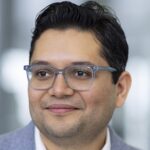
Vaibhav Bajpai
(Germany)
Vaibhav Bajpai is a professor and head of the data-intensive Internet computing research group at the Hasso Plattner Institute and the University of Potsdam. He received his PhD and master’s degrees from Jacobs University Bremen. He’s the recipient of several awards, including the ACM SIGCOMM best paper award and the IEEE CNOM best dissertation award. His current research focuses on bettering the design and operation of networked systems using data-intensive methods.
Disclaimer: The Internet Society reserves the sole right to decide if an applicant proposal meets the eligibility requirements.
Image credit: © Yurian Quintanas Nobel