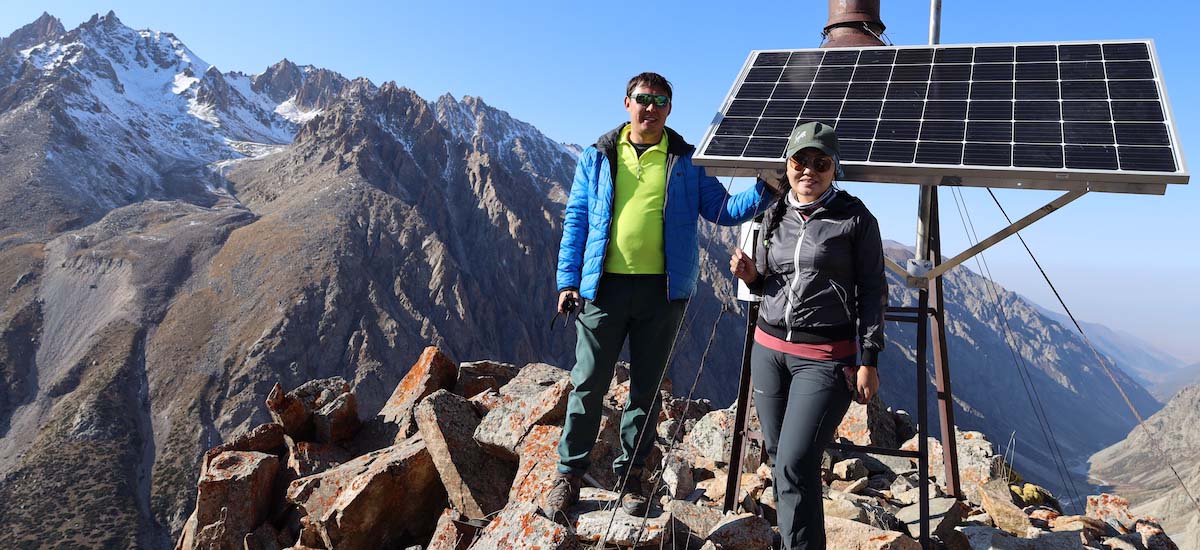

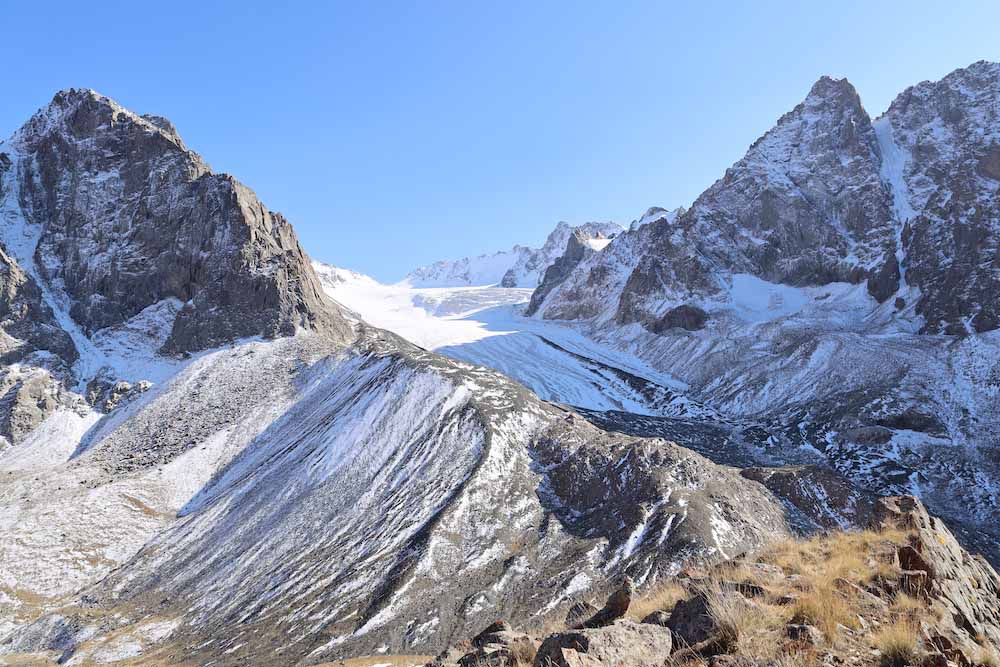
In Kyrgyzstan, where more than 90% of the country is covered by mountains, scientists are working in some of the most extreme environments on Earth. At altitudes above 3,000 meters, temperatures can drop as low as -48°C.
For decades, glaciers and frozen landscapes remained relatively stable. Now, that stability is shifting. Permafrost that had never melted before is beginning to thaw, and new glacial lakes are forming—bringing new risks with them. Sudden glacial lake outburst floods can destroy infrastructure, disrupt livelihoods, and threaten lives, while climate change is already impacting agriculture, tourism, and local economies.
Understanding these changes in real time has long been a challenge. The terrain makes it difficult to install and maintain monitoring systems, and data collection has often relied on manual processes. In some cases, researchers travel for hours to reach sensors, manually record observations, and only share that data days later. This delay limits the ability to respond quickly to emerging risks.
That is beginning to change.
The Internet Society Kyrgyzstan Chapter is working to bring connectivity to these remote areas, focusing on glacier monitoring as a critical use case. By deploying low-cost sensors and leveraging technologies such as LoRaWAN, the project enables continuous data collection in areas that were previously disconnected.
“Funding from the Internet Society Foundation‘s Research grant program makes it possible to reach truly remote locations and connect people and devices in ways that were unimaginable even five years ago,” said Aziz Soltobaev, cofounder and project manager at the Internet Society Kyrgyzstan Chapter. “We are generating data that can help warn communities and keep them safe.”
Across five locations—Baitik, Tatyr, Kyz-Kuio, Kok-Moinok, and Ak-Say—sensors are now monitoring environmental conditions and risks such as mudflows, landslides, and glacial lake outburst floods. In Baitik, the system has demonstrated that its data closely matches that of reference-grade weather stations, reinforcing confidence in the reliability of these more accessible solutions.
Instead of waiting days, data is now transmitted every five to 15 minutes—creating a near-real-time picture of changing conditions.
This data is shared across a network of stakeholders, including scientists, government agencies, and local communities—turning remote measurements into actionable insight.
Anyone can access real-time information through a public dashboard, while institutions such as the Ministry of Emergency, the Academy of Sciences, and regional research organizations use the platform to monitor trends and set up alerts that support decision-making.
“We offer the information on our web portal, and it’s very open for the population,” said Madina Amanova, head of the Analysis and Forecasting Division at the Ministry of Emergency of the Kyrgyz Republic. “It can improve response times, decrease economic and infrastructure losses, and help protect people’s lives.”
Early warning systems are also taking shape. Alerts can be triggered when certain thresholds are reached, notifying decision-makers by email, while new tools—such as a Telegram bot—are being tested to bring faster warnings directly to communities.
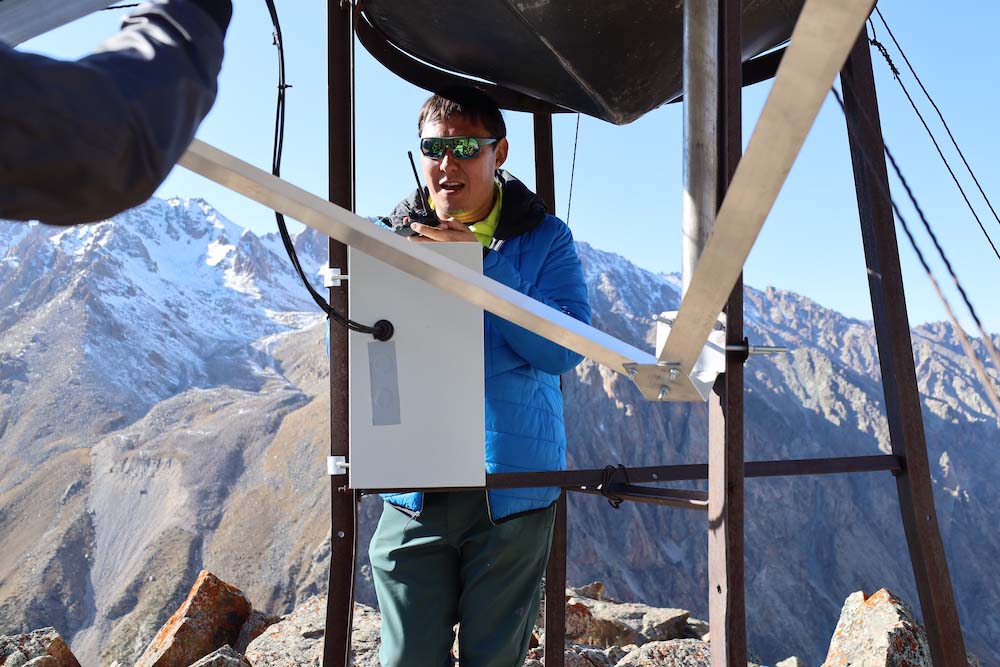
Getting this technology into place is not simple. Reaching glacier sites often requires hours of travel across difficult terrain, sometimes on horseback. But these efforts are making something possible that was unimaginable just a few years ago: connecting both people and devices in some of the most isolated environments in the world.
The Internet Society Kyrgyzstan Chapter shows that connectivity can transform how we understand and respond to climate change. By combining local expertise, affordable technologies, and real-time data, communities are better equipped to anticipate risks, reduce impact, and protect lives.
Our chapters are at the heart of our work to build an Internet for everyone. Find your local chapter.
Image © Gustavo Streger